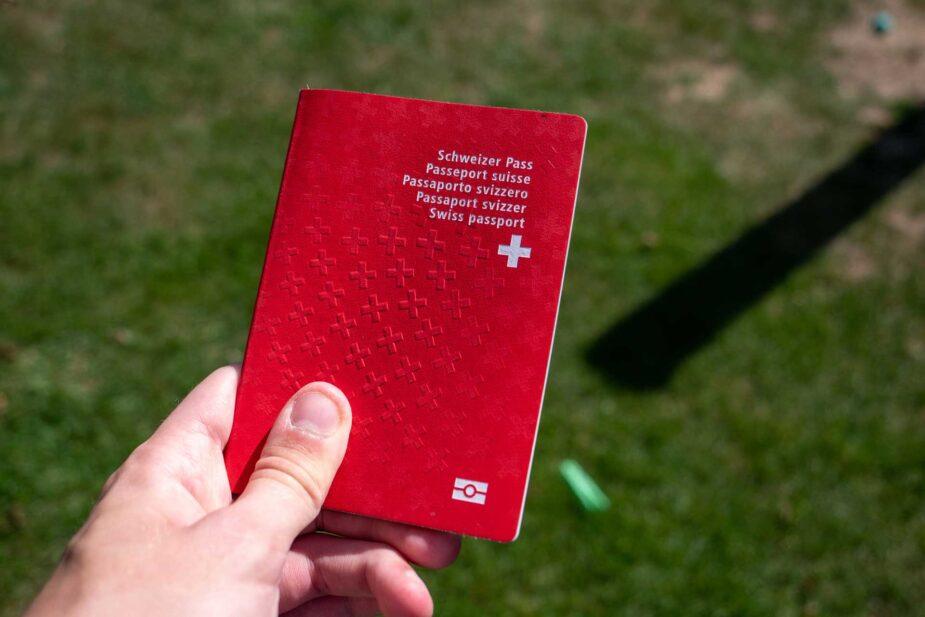
Swiss citizens have the opportunity to live in a developed country with the highest level of nominal wealth per capita after Luxembourg. More than 60% of the landscape is occupied by the picturesque Alps, the banking system is the safest in the world, and neutrality has been maintained here since 1815. A Swiss passport allows visa-free travel to more than 160 countries, but the value of the document goes far beyond that — it provides access to high living standards, prestigious education, and other privileges.
Foreigners can obtain citizenship of the Confederation through ordinary or simplified naturalization and, in rare cases, through descent. The conditions for obtaining a Swiss passport are quite strict and require residence in the country, successful integration into society, and knowledge of the country’s culture, traditions, and system of government. This article covers the ways to obtain citizenship, the requirements and necessary steps, and other aspects of immigration. You will also find practical advice for the successful and rapid legalization of status in Europe.
The Realities of 2026: Laws and Trends
In 2026, Switzerland retained its quota system for the employment of qualified specialists from countries outside the EU and EFTA. The Federal Council kept the previous limit of 8,500 permits per year, of which 4,500 are category B and 4,000 are category L. Priority is still given to candidates already available on the Swiss and EU/EFTA labor markets: employers may hire workers from third countries only if they can demonstrate that the vacancy could not be filled by applicants from these categories.
At the same time as maintaining its need for foreign labor, Switzerland is tightening control in the area of migration. Parliament supported measures to expand border controls to combat illegal migration and cross-border crime. In addition, changes relating to asylum and family reunification are being discussed in the country. In particular, for persons with temporary admission, the waiting period for family reunification is to be reduced from 3 to 2 years in connection with the position of the European Court of Human Rights and the subsequent adaptation of national regulations. At the same time, accelerated asylum procedures have been applied in Switzerland since 2019.
Expanded Opportunities: What a Swiss Passport Provides
Citizenship of the Swiss Confederation provides access to exceptional privileges and allows a person to become part of a closed and respected society. The distinctive red passport with its updated design represents more than the country’s latest standards of quality and leadership in innovation. Swiss citizens have access to a stable future with comprehensive state support and consistently high living standards, as well as the following advantages:
- consular assistance and protection abroad through one of the most reliable diplomatic systems in the world;
- visa-free travel or simplified entry to more than 160 countries, including the United Kingdom, Japan, Canada, and the United States;
- the ability to live and work in Iceland, Norway, Liechtenstein, and the European Union without obtaining permits, even though Swiss citizens are not EU citizens;
- the right to participate directly in a unique political system, initiate referendums, and influence legislation;
- priority in social and housing policy, including pension programs, subsidies, and cooperative housing, compared with residence permit holders;
- access to an advanced healthcare system and subsidized health insurance;
- study at the world’s leading universities (ETH Zurich ranks 7th according to the QS World University Rankings) and access to educational grants under cantonal and federal programs;
- the ability to avoid double taxation under international agreements concluded with most industrialized countries, including the United States;
- simplified conditions for doing business and support for new entrepreneurs from the innovation agency Innosuisse.
Swiss citizenship offers many advantages, but the length of the naturalization process and the complexity of the procedure are the main drawbacks on the path to the desired status. To become a full resident of a highly developed European country as quickly as possible, it is worth seeking the assistance of international law specialists. Legal support is especially relevant amid tightening and changing immigration legislation. Book a consultation to receive an individual solution.
Learn more about the chances for fast, easy and guaranteed obtainment of second citizenship
Submit an application form and we'll get back to you!
Ways to Become a Swiss Citizen
According to the Citizenship Act, a Swiss passport can be obtained through restoration of citizenship, ordinary naturalization, or simplified naturalization. Citizenship is also acquired by birth or adoption. Below, we examine in more detail the ways of obtaining a Swiss passport that are available to foreigners.
Naturalization
To become a Swiss citizen through ordinary naturalization, it is necessary to reside in the Confederation for 10 years and meet the other requirements of federal law. Municipalities also impose their own conditions. In addition, cantons and communes establish their own residence requirements within their territories. For example, in the canton of Zurich, at least 2 years of residence are generally required before filing an application, while in the canton of Zug at least 5 years of residence in the canton and 3 continuous years in the relevant commune are required. The grounds that allow a person to obtain a residence permit and later apply for citizenship include:
- Employment.
A Swiss company must obtain a work permit when hiring a foreigner from outside the EU/EFTA. Depending on your country of origin, you may need a visa to enter the country. A residence permit is issued only to specialists in their field, such as executives, teachers, and people with many years of professional experience. Other requirements include an employment contract, a work permit, and proof of qualifications. The residence permit is valid for 1 year or more and can be renewed. - Self-Employment.
To carry out entrepreneurial activity, it is necessary to obtain a permit (license) to provide services. The application is submitted to the Federal Department of Economic Affairs and may be approved if the foreigner has special qualifications and their activity is of economic interest to the Confederation. Other requirements include a business plan, an education diploma, and proof of appropriate work experience. The permit is valid for one year and can be renewed. - Education.
A residence permit is issued on condition of admission to a Swiss educational institution. It is also necessary to provide a CV and prove that sufficient funds are available for self-support (the amount depends on the canton but, as a rule, should be at least EUR 21,824 in a bank account, a scholarship award, or a guarantee from an authorized person covering the expenses). The student must provide a written statement of their intention to leave the country after completing the course. The residence permit is issued for the duration of study or for one year and may be renewed if the student makes satisfactory academic progress. After graduation, the permit can be extended for another 6 months to look for work and obtain a residence permit on a new basis.
Simplified Naturalization
In most cases, it is possible to obtain a Swiss passport through a simplified procedure after 5 years of residence in the country. An important criterion is the absence of dependence on social assistance and the existence of close ties with the country — cultural, educational, or social. The following categories of applicants may qualify for a passport:
- former citizens of the country (if citizenship was lost less than 10 years ago, no residence period is required; otherwise, a three-year residence period in the Confederation is established);
- stateless persons;
- applicants under the age of 25 who were born in Switzerland into a foreign family that has lived in the country for three generations.
Swiss Citizenship for Children and Family Matters
A child automatically acquires Swiss citizenship by right of blood (jus sanguinis) or through adoption, regardless of the place of birth, if one of the parents is Swiss. Unlike, for example, Australia or Canada, Switzerland does not apply the principle of jus soli. If a child was born and raised in Switzerland but the parents are foreigners, the child cannot obtain citizenship automatically. However, for naturalization purposes, the time spent in the country between the ages of 8 and 18 is counted twice, although the total residence period must still be at least 6 years.
A foreigner married to a Swiss citizen may obtain a Swiss passport through simplified naturalization if the following conditions are met:
- the marriage has lasted for at least 3 years;
- integration into society and knowledge of the country’s official language depending on the canton (German, Italian, French, or Romansh);
- residence in the country for a total of 5 years, including 1 uninterrupted year immediately before filing the application.
If one parent obtains Swiss citizenship, minor children may also be included in the application if they live together and meet the integration requirements. A child under the age of 22 who did not undergo naturalization together with family members is entitled to obtain a passport through a simplified procedure. Registered partners of Swiss citizens may obtain a passport only through ordinary naturalization.
Foreigners holding a category B or C residence permit may use family reunification to bring their spouses and minor children to Switzerland. The applicant must have sufficient income and suitable housing, and their spouse must have basic knowledge of the official language (A1). Reunified family members receive the right of residence and may later qualify for naturalization.
Step-by-Step Process: How to Obtain Swiss Citizenship
To obtain a Swiss passport, you must meet the requirements established by the federal government, cantonal authorities, and municipal authorities. In particular, additional integration criteria apply depending on the place of residence. It should also be taken into account that a residence permit is valid strictly in the canton where it was issued, so moving to another canton will require obtaining a new permit. In general terms, the ordinary naturalization process includes the following stages:
- Obtaining a Category B Residence Permit (Ausweis B).
In most cases, the residence permit must be obtained before arriving in Switzerland. The application is submitted online to the cantonal migration authority with proof of the purpose of immigration, sufficient income, and payment of the fee (the amount depends on the region, for example, EUR 127 in Geneva). After the application is approved, which takes an average of 3–6 months, and after arrival in the country, you will receive an invitation to obtain a foreign national identity document. The residence permit is valid for one year and can be renewed. - Renewal of the Residence Permit.
An application to extend the residence permit must be submitted no later than 2 months before the current permit expires, with payment of the applicable fee. The permit is renewed if the conditions for issuance of the original residence permit continue to be met. The immigration status can be checked on the cantonal electronic portal. - Obtaining Permanent Residence.
After 10 years of residence in Switzerland, you can obtain a category C permit (Ausweis C), which allows you to live in the country indefinitely. For certain categories of foreigners and certain nationalities, an earlier period of 5 years may apply. You must meet the integration requirements and know the official language used by the administrative authority. The application is submitted to the local residents’ registration office, with biometric data provided and the fee paid. In different cantons, the state fee is approximately EUR 50 to EUR 140 depending on the procedure, applicant category, and whether biometric data are required. The processing time varies in each case and is determined by the competent authority. - Acquiring Citizenship.
The naturalization application is submitted at the place of residence through the commune or canton. The procedure includes payment of fees, the amounts of which are established at the municipal, cantonal, and federal levels and may vary significantly. The assessment includes an evaluation of integration, which may involve an interview and a test of knowledge about the country. The processing time is usually around 2 years and depends on the canton and the complexity of the case. The final decision is made by the competent authorities at the commune, cantonal, and federal levels. - Taking an Oath.
There is no single mandatory oath for naturalization in Switzerland, although individual cantons may establish their own ceremonies and additional procedural requirements. For example, in the canton of Geneva, naturalization is accompanied by a public oath before the Council of State. - Obtaining National Documents.
To obtain a Swiss passport and/or identity card, you must first submit an application remotely or in person at registration centers and pay the fee (about EUR 234 for the passport and card). For verification, biometric data (fingerprints, photo, signature) must be provided at the place of registration. The documents will be ready within 10 working days and delivered by post. The passport is a red booklet with white lettering and distinctive embossing. The identity document is a plastic card. Both documents are valid for 10 years.
The path to a Swiss passport is quite complex because it is not enough to know only the legislation of the Confederation; the requirements of the specific canton must also be taken into account.
This task can be handled effectively with the assistance of immigration lawyers. Specialists will select the optimal program, prepare documents in accordance with local requirements, and support you until you receive your passport. Use a consultation to assess your prospects for obtaining Swiss citizenship or to find an alternative immigration solution in Europe.

Individual selection of immigration program
Get more information about the peculiarities of immigration to the EU at a free consultation

Requirements for Obtaining Swiss Citizenship
The requirements for foreigners wishing to obtain a Swiss passport differ depending on the method of acquiring citizenship and the canton in which the application is filed. Standard conditions include:
- knowledge of an official language at no lower than B1 orally and A2 in writing;
- no criminal record or debts to the state;
- participation in the country’s economic life (employment or education);
- integration and basic knowledge of the system of government and social norms — the format of the test or interview is determined by the canton and commune;
- compliance with the required period of residence in the country and possession of permanent residence.
Compliance with the naturalization requirements must be documented. The naturalization application and list of requirements are issued by the administration at the place of registration. The specific conditions imposed by local authorities can be checked on the official cantonal websites.
Documents Required to Obtain Citizenship
To apply for Swiss citizenship, it is necessary to compile an extensive dossier. Documents issued by foreign authorities must be translated into German or another official language and properly legalized. It should be taken into account that some certificates and extracts are valid only for a short period — up to six months. To apply for naturalization, the following documents must be prepared:
- a naturalization application in the form prescribed by the canton or commune;
- an extract from the Swiss civil status register, generally issued no more than 6 months earlier;
- a valid passport or other identity document;
- a valid permit C / Ausweis C;
- proof of language proficiency at the federally required level of B1 orally and A2 in writing;
- documents confirming the absence of serious legal or financial issues — depending on the canton, these may include a certificate from the tax authority, an extract from the debt enforcement register, and information confirming the absence of ongoing criminal proceedings or significant records;
- confirmation that the applicant has not received social assistance in recent years, or documents proving its repayment if this is permitted in the specific case;
- proof of integration and participation in economic life or education;
- a document confirming completion of a basic knowledge test about Switzerland, if such a test is required by the canton, or another acceptable method of proving this knowledge;
- receipts or proof of payment of fees, if the canton requires them to be attached at the time of filing.
Depending on the immigration basis, additional documents may be required, including:
- a marriage certificate or certificate of registered partnership with a Swiss citizen, proof of the partner’s citizenship, and evidence of at least 3 years of cohabitation;
- proof of residence in the country for the required period;
- school certificates confirming completion of compulsory education in Switzerland;
- proof of custody rights (divorce decision, consent of the other parent).
Children may be included in a naturalization application by additionally providing a birth certificate and parental consent to naturalization. If the child is over 12 years old, evidence of participation in social life will be required, such as a school report and proof of academic progress. After obtaining citizenship, it is possible to apply for a Swiss passport and/or ID card by presenting an identity document, proof of payment of the state fee, and providing biometric data.
How Much Does Swiss Citizenship Cost?
The total cost of obtaining Swiss citizenship depends on various factors: place of residence, method of naturalization, the applicant’s age, and the number of people included in the application. The cost of living in the country is among the highest in the world, and the approximate expenses for one person amount to around EUR 1,459 per month. Switzerland does not have a single fixed nationwide price for residence permits, permanent residence, or ordinary naturalization: many fees depend on the canton and sometimes even on the commune. The table below shows the approximate cost of obtaining citizenship in 2026 in the canton of Geneva:
| Expense item | Minimum cost, EUR |
| Document legalization | ≈33 |
| Residence permit | ≈ 127 |
| Foreign national ID card | ≈ 24 |
| Residence permit renewal | ≈ 89 |
| Permanent residence | ≈ 127 |
| Naturalization (ordinary, adult under 25: cantonal + federal fee) | ≈ 1,034 |
| Naturalization (ordinary, adult over 25: cantonal + federal fee) | ≈ 1,469 |
| Simplified naturalization | ≈ 980 |
| Passport | ≈ 158 |
| ID card | ≈ 76 |
Switzerland does not provide an opportunity to buy a passport and does not offer a classic residence-by-investment program. For foreigners from countries outside the EU/EFTA, relocation through business is possible only under the standard immigration procedure upon proof of the project’s economic benefit to the country. At the same time, the law allows residence permits for pensioners and other financially independent persons who can demonstrate sufficient means to live without relying on social assistance.
Dual Citizenship in Switzerland
Switzerland has officially allowed second citizenship since January 1, 1992. Foreigners undergoing naturalization may hold two or more passports without losing the passport of their country of origin. At the same time, it is important to distinguish between second and dual citizenship: in the second case, a person holds passports of two states without a special international agreement between them, while dual citizenship usually arises when countries mutually recognize such status and regulate the person’s rights and obligations by treaty. In practice, holders of Swiss passports are more often considered to have second rather than dual citizenship.
Swiss law does not require applicants to renounce their first national passport. However, it should be taken into account that loss of the original citizenship upon acquiring Swiss citizenship is still possible if this is provided for by the law of the foreign country.
If a person has a second passport, they may freely use either document, choosing the one that offers more opportunities. For example, when crossing the Swiss border, it is recommended to present the Confederation’s national identity document. This helps avoid additional checks or the need to obtain a visa, as may be required for foreigners. It is also important to take into account that Swiss authorities may be unable to provide assistance and protect a person’s interests abroad if that person entered the relevant country using another passport.
Submit an application form and we'll get back to you!
Debunking Myths and Common Mistakes
One of the most common misconceptions about Swiss citizenship is the belief that it can be obtained through large investments or by opening a business. In fact, the country does not issue “golden visas.” Even if a foreigner opens a successful company and pays high taxes, they will still have to go through the standard naturalization process without any privileges. Another myth is that the birth of a child in the country automatically makes the child a citizen of the Confederation. This is not the case: a Swiss passport is transmitted only through the parents under the principle of jus sanguinis.
To avoid refusals of citizenship, it is important to review the experiences of immigrants whose applications were approved and to strictly follow the legal requirements. For example, a man who had lived for more than 10 years in the canton of Jura did not receive approval for naturalization because of public-order violations, namely mowing lawns on Sundays. Refusals are also possible because of insufficient integration or errors in document translations. Careful preparation of the dossier and support from specialists who take into account the nuances of cantonal and national legislation help avoid such situations.
Accelerated Routes: Is It Possible to Obtain Citizenship Faster?
Unlike Switzerland, where the process of acquiring citizenship takes more than 10 years, a number of European countries have accelerated immigration programs that often do not require compliance with a residence period. For example, Romania, Bulgaria, and Slovenia provide an opportunity to obtain an EU passport by descent, provided that territorial or ethnic ties can be proven. In addition, repatriation in most cases does not require knowledge of a foreign language, and applicants are exempt from most standard requirements, such as proof of financial solvency.
Now is a favorable time for immigration because the legislation of some European countries still remains flexible, although requirements for foreigners are becoming stricter every year.
To obtain a European passport within 4 months, it is worth securing legal support. Specialists will help select an immigration program, compile the dossier, and submit the application in accordance with current requirements. EU citizenship opens broad opportunities for living, education, and work in all European Union countries and also provides advantages for legalizing status in Switzerland.
About the author

Diane Weber is an international law specialist with 10 years of legal practice experience. Her portfolio includes successful stories of citizenship in different European Union countries under simplified procedures. Diana provides detailed advice and helps many people to achieve their immigration goals in a short period of time, including resolving visa issues, assisting in obtaining residence permits and citizenship in the EU countries. In her blog, Diana Weber enjoys providing readers with detailed information about the features of most popular programs for obtaining a second passport.
No comments