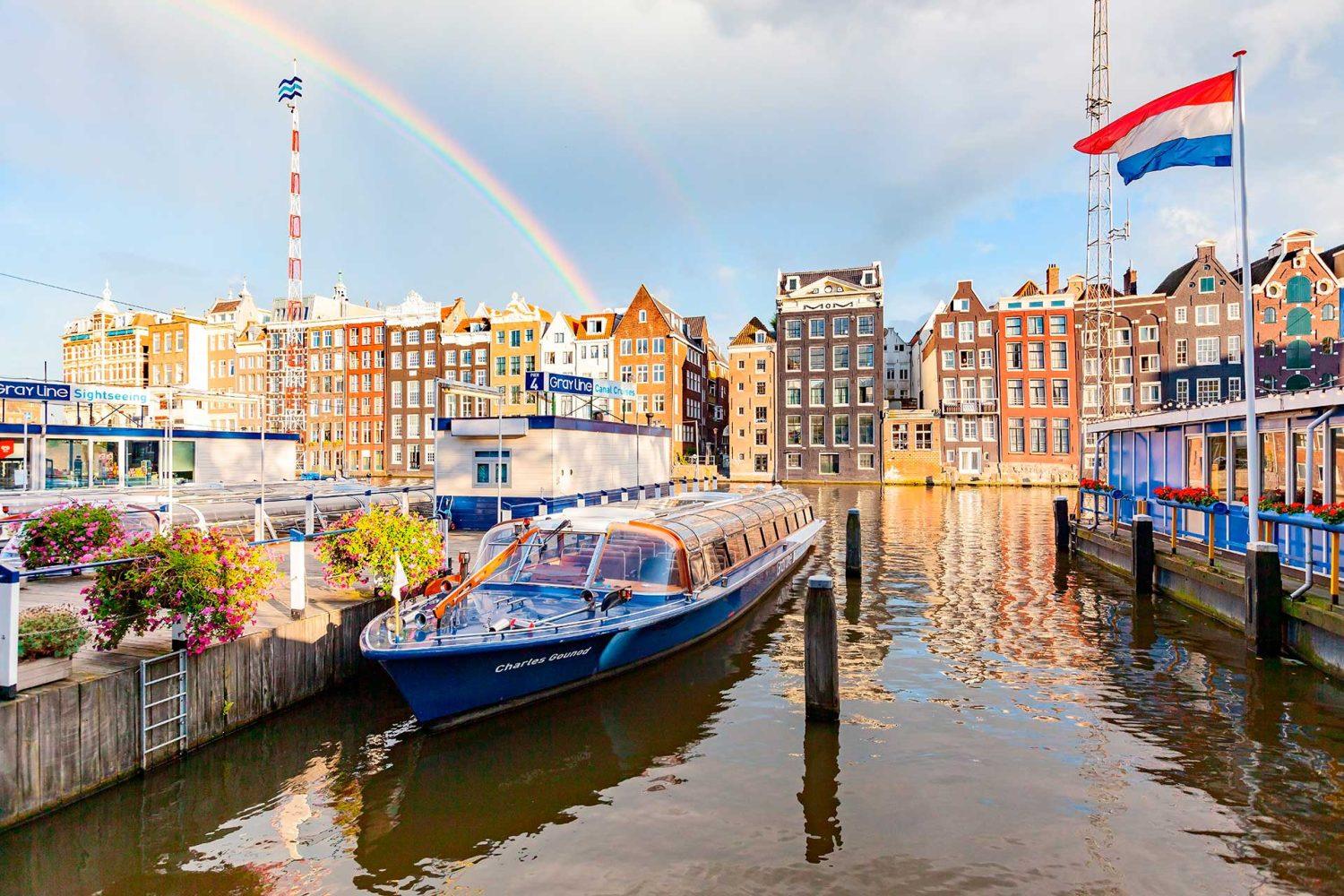
The Netherlands is known for its picturesque canals, cheese, windmills, and tulips. However, it is less widely known that one of its cities — The Hague — ranks among the top cities in the world for quality of life. In addition, the country holds a top position in global happiness rankings. Obtaining a Dutch passport allows you to become an EU citizen with all associated benefits, including visa-free travel to many countries and the opportunity to integrate into a progressive society with a stable economy, high-quality education, and an advanced healthcare system.
The country offers various pathways for immigration, the most popular being employment, self-employment, education, and family reunification. The most common route for foreign nationals to obtain citizenship is naturalization, which requires at least 5 years of residence in the country. An accelerated option exists through the procedure known as “option,” but it is available only to a limited group of applicants. Below, we will explore in detail the requirements and pathways to Dutch citizenship, as well as dispel some common myths about immigration to the Netherlands.
2026 Realities: Laws and Trends
The Dutch government supports legal migration by maintaining an effective framework for residence permits, citizenship, and asylum. At the same time, the country faces challenges in housing, healthcare, and education due to a high population density within a relatively small territory. As a result, in response to increasing migration flows, the Netherlands is tightening rules for low-skilled workers and introducing stricter measures in asylum procedures.
In 2026, the Netherlands places particular emphasis on attracting professionals in sectors such as IT, healthcare, environmental sciences, and engineering. Migration policy also reflects increased support for entrepreneurship and startups. In particular, the government is expanding the Dutch Startup Visa program, creating more opportunities for launching innovative projects that contribute to the national economy.
Learn more about the chances for fast, easy and guaranteed obtainment of second citizenship
Submit an application form and we'll get back to you!
Extended Opportunities: What a Dutch Passport Offers
Dutch citizens live in a country with a high level of social protection, innovative support programs, and extensive career opportunities. A passport from this EU member state provides the following benefits:
- the right to pass citizenship on to children by descent;
- the ability to live and build a career in EU countries without the need for residence permits or additional authorizations;
- visa-free travel to 160+ countries worldwide;
- the right to hold public office, vote, and run in elections, including for the European Parliament;
- guaranteed legal and consular protection abroad;
- advantages in employment within major European institutions, as more than 500 international organizations are based in The Hague (including the International Court of Justice, UNICEF, Europol, and others);
- favorable conditions for doing business, including access to unique tax benefits such as the “30% ruling” for highly skilled foreign employees;
- eligibility for financial support and social benefits, such as child allowances for working parents;
- access to high-quality education and advanced healthcare in the Netherlands.
Ways to Become a Dutch Citizen
Dutch citizenship can be obtained by birth, adoption, or recognition, as well as through naturalization or the option procedure. The latter two are the most relevant for foreign nationals and are therefore discussed in more detail below.
Naturalization
To obtain Dutch citizenship through standard naturalization, you must live in the Netherlands for at least 5 years on the basis of a residence permit. The most common grounds for obtaining a residence permit include:
- Employment.
To work in the Netherlands for more than 3 months, you need a combined permit (GVVA), which can be applied for either by the applicant or the Dutch employer. Requirements include an employment contract guaranteeing a sufficient salary (from 2,294 EUR in 2026) and registered housing. Depending on the category, additional documents such as proof of qualifications and experience may be required. The permit is issued for the duration of the employment contract, up to a maximum of 5 years, with the possibility of extension and eventual citizenship application. - Startup.
The Dutch Startup Visa is issued for one year to foreigners who want to launch an innovative business in the Netherlands. To obtain this permit, you must sign an agreement with a certified facilitator who supports and mentors the project. Applicants must submit a business plan, register with the Netherlands Chamber of Commerce (KVK), and demonstrate sufficient income. After one year, you must apply for a new residence permit, for example, based on self-employment. - Self-employment / Entrepreneurship.
To qualify, you must be registered as a self-employed person or entrepreneur with the KVK. Additional documents may be required, such as a business plan and proof of qualifications. You must also demonstrate sufficient income and have valid health insurance. The permit is typically issued for 2 years, and renewal requires proof of business viability (annual reports, profit and loss statements). - Highly skilled employment.
Highly skilled migrants benefit from a simplified immigration procedure. The application is submitted by a Dutch employer acting as a sponsor. A residence permit can be granted based on an employment contract with a salary starting from 3,122 EUR per month. The permit is issued for the duration of the contract, up to 5 years, with the possibility of extension. - Study.
Student residence permits are applied for by the accredited educational institution where the applicant has been accepted. The student must demonstrate sufficient financial means to cover expenses for 12 months (verified annually) and show academic progress. The permit duration depends on the study program, up to a maximum of 5 years. After graduation, a permit for job searching can be obtained. - Job search (orientation year).
Within 3 years after completing an accredited program at a Dutch or international university, graduates can apply for a non-renewable residence permit valid for one year. During this period, they can work without restrictions. To remain in the Netherlands after it expires, the basis of residence must be changed, for example, to employment, self-employment, or a startup visa. - Humanitarian grounds.
If you have valid reasons to fear violence or persecution in your home country, you may apply for asylum in the Netherlands. The review process usually takes at least 6 months. If approved, a residence permit is issued for up to 5 years with the possibility of extension. Refugees may apply for permanent residence and citizenship after meeting standard naturalization requirements.
Option Procedure
The option procedure is an accelerated way to obtain Dutch citizenship, typically taking around 3 months. Citizenship by option is available to adult applicants who meet one of the following conditions:
- individuals under 21 who were born in the Netherlands and have lived there continuously for at least 5 years (3 years for stateless persons);
- individuals who have lived in the Netherlands since the age of 4 on a residence permit (without the possibility of holding dual citizenship);
- former Dutch citizens who lost EU residency rights and faced serious difficulties as a result;
- individuals born or adopted by a Dutch mother before January 1, 1985;
- former citizens of the Netherlands who have lived in the country for at least one year;
- women who married foreign nationals before January 1, 1985 and lost their Dutch citizenship (the application must be submitted within one year after divorce or the spouse’s death);
- individuals aged 65 or older who have lived in the Netherlands for at least 15 years with a valid residence permit.
Applications for citizenship are submitted to the local municipality, which must make a decision within 13 weeks. Under the option procedure, applicants are not required to prove integration into Dutch society.
Special Conditions for Turkish Citizens
Turkish citizens benefit from more flexible conditions when immigrating to the Netherlands and obtaining EU citizenship, due to the Association Agreement between Turkey and the EU. For example, they often face lower costs when applying for residence permits.
Additionally, family reunification is available from the age of 18 (instead of 21, as for other nationalities). Turkish citizens who have worked for the same employer for 3 years may no longer need a work permit, whereas for other foreign residents this requirement is typically lifted only after 5 years.
Dutch Citizenship for Children and Family Aspects
A child whose mother or father is a Dutch citizen automatically acquires citizenship of the Kingdom. Minor children can also be included in their parents’ naturalization application. A child over the age of 11 must provide consent before obtaining Dutch citizenship, and if only one parent submits the application, the other parent must give permission. In addition, a minor who has been raised by a Dutch parent for at least 3 years may obtain citizenship through the option procedure within 13 weeks after applying.
The Netherlands also offers a simplified pathway for individuals who have been married to or in a registered partnership with a Dutch citizen for at least 3 years. One advantage of this route is that there is no requirement to reside in the country or pass a Dutch language test. Applicants may also retain their original citizenship. However, both partners must be at least 21 years old.
Residents of the Netherlands can use the family reunification program to obtain a Dutch residence permit for a spouse, partner, and minor children. The sponsor must provide suitable housing for their family members. Applicants must also demonstrate sufficient income, the amount of which depends on family composition and the basis for immigration. The permit remains valid for the duration of the sponsor’s residence permit. EU citizens and permanent residents of the Netherlands can sponsor family members for residence permits valid for up to 5 years.
Step-by-Step Guide: How to Obtain Dutch Citizenship
In most cases, the process of obtaining Dutch citizenship takes at least 5 years. To become a citizen of the Kingdom of the Netherlands, you need to go through the following steps:
- Apply for a visa.
To enter the Netherlands and stay longer than 90 days, you must obtain a visa equivalent to a temporary residence permit (MVV). The application can be submitted by you at a consulate or by an authorized party, such as a Dutch employer, through the Immigration and Naturalisation Service (IND). Required documents typically include an application form, passport, and photo. You must also confirm the legal purpose of immigration and pay an administrative fee. - Obtain a residence permit.
After arriving in the Netherlands, you must apply for a residence permit. Requirements include a valid passport, health insurance, proof of sufficient financial means, no criminal record, and payment of a fee (depending on the purpose of stay). Applications are processed by the IND, and you must first register your address with the municipality. The permit is usually issued for 1 to 5 years and can be extended if the original conditions remain valid. - Obtain permanent residence (PR).
After 5 years of residence in the Netherlands, you can apply for permanent residence. Applicants must pass an integration exam (language level A2, unless exempt) and demonstrate stable income. The application can be submitted online or by mail, with a fee of 254 EUR. Processing typically takes up to 6 months. The PR permit is issued as a biometric card, which must be collected from an IND office by appointment. - Apply for citizenship.
After 5 years of residence, you may apply for Dutch citizenship. Applications are submitted at the local municipality. Applicants must demonstrate knowledge of the Dutch language, provide proof of a clean criminal record, and usually renounce their previous citizenship. The application fee starts from 1,139 EUR, and processing takes around 12 months. You can track your application status on the IND website. After approval, you must attend a citizenship ceremony and take the oath within one year. - Obtain Dutch ID and passport.
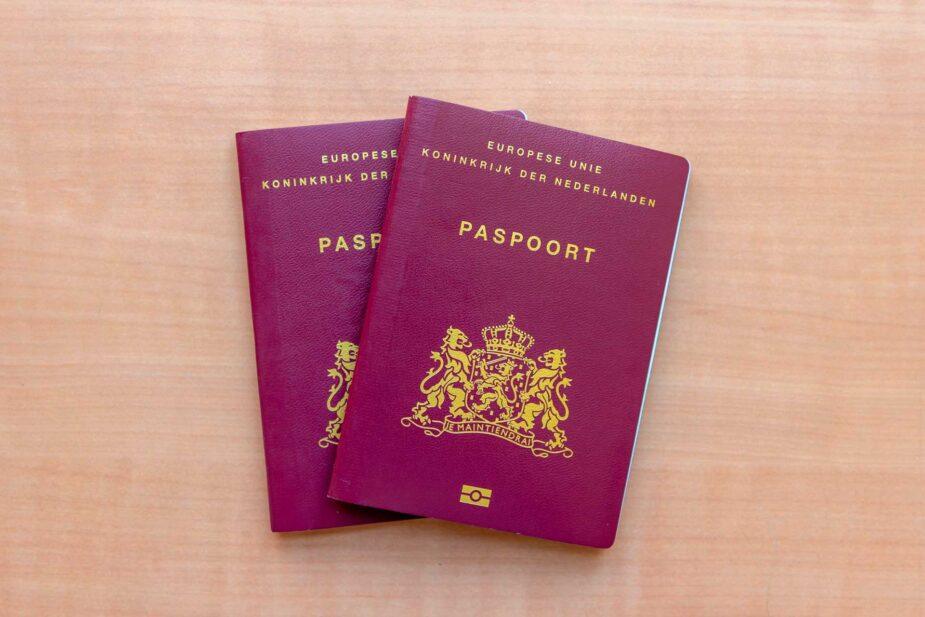
After receiving the naturalization certificate, you can apply for a Dutch ID card and passport for travel outside the EU. Applications are submitted at the municipality with your existing ID, photographs, and biometric data (fingerprints). The cost is approximately 80 EUR for an ID card and 88 EUR for a passport. Documents are typically issued within one week and can be collected or delivered (delivery costs around 19 EUR).
Obtaining a Dutch passport requires completing all immigration stages in compliance with legal requirements, which can take significant time and resources. If your goal is to obtain EU citizenship more quickly, it may be worth exploring alternative options. Experienced immigration lawyers can develop a personalized strategy, assist with document preparation, and ensure full compliance with legal requirements. By obtaining an EU passport, you can gain the right to live in the Netherlands or other EU countries without additional conditions.
Submit an application form and we'll get back to you!
Requirements for Obtaining a Dutch Passport
Acquiring Dutch citizenship through standard naturalization requires continuous residence in the Netherlands for at least 5 years. In addition, applicants must meet the following criteria:
- be of legal adult age;
- provide proof of identity;
- hold a valid residence permit;
- demonstrate knowledge of the Dutch language at A2 level (this requirement does not apply to retirees, citizens of Belgium and Luxembourg, or individuals who studied in a Dutch school and lived in the country for at least 8 years);
- renounce their current citizenship, unless exemptions apply;
- have no criminal record.
Citizenship will not be granted to individuals in a polygamous marriage, as polygamy is prohibited and punishable by law in the Netherlands. To prove eligibility, it is essential to prepare the required documents accurately. An incomplete application file may significantly delay the process, as additional documents will need to be submitted and a new appointment with the municipality will have to be scheduled.
Documents Required for Dutch Citizenship
To obtain Dutch citizenship, you need to prepare a standard application package confirming that you meet the naturalization requirements. It typically includes:
- a valid passport;
- a birth certificate;
- a valid residence permit (if you are not a citizen of Switzerland or the EU);
- a certificate confirming the results of a language test or other proof of integration (or exemption from this requirement).
If minor children are included in the application, you must provide their birth certificates and passports (if available). If only one parent is applying, a copy of the other parent’s residence permit is also required. Depending on the legal basis for acquiring citizenship, additional documents may be required, such as:
- a marriage certificate and proof of cohabitation (rental agreement, bank statements);
- an employment contract;
- civil status documents confirming family ties with a resident of the Kingdom;
- proof of refugee status.
All foreign documents must be legalized and accompanied by a certified translation into Dutch, German, or English.
Cost of Obtaining Dutch Citizenship
The cost of acquiring Dutch citizenship depends on the chosen immigration pathway. In addition to administrative fees, you should also consider living expenses (from approximately 1,021 EUR per month per person), rent (around 1,165 EUR for a one-bedroom apartment), language testing (about 350 EUR), and document translation and legalization (around 27 EUR per apostille).
Below is an overview of the main administrative fees as for 2026:
| Expense Item | Cost for Adults (EUR) | Cost for Children (EUR) |
| Residence permit (VVR) | 254–423 (depending on basis) | 81 |
| Residence permit renewal | 254–423 | 81 |
| Permanent residence (PR) | 254 | 81 |
| Naturalization | 1,139 | 168 |
| Option procedure | 241 | 27 |
| ID card | 80 | 43 |
| Passport | 88 | 67 |
Lower fees apply to Turkish citizens, while residents of San Marino and Israel are exempt from residence permit issuance fees. The Netherlands does not offer citizenship by investment. Even if you establish a business, you will initially only receive a residence permit. Dutch citizenship can only be granted if you meet the standard naturalization requirements.
Dual Citizenship in the Netherlands: Key Features
Under the Dutch Citizenship Act, the Netherlands generally does not allow dual citizenship, although there are several strictly regulated exceptions. You may retain a second citizenship in the following cases:
- marriage or registered partnership with a Dutch citizen;
- inability to renounce your citizenship under the laws of your country of origin;
- holding citizenship of a state not recognized by the Netherlands, such as Palestine or Taiwan;
- obtaining refugee status;
- being born in the Netherlands and permanently residing there;
- acquiring citizenship through the option procedure.
Children may automatically acquire two or more citizenships at birth depending on their parents’ nationality. It is important to note that even if a person holds several passports, the Netherlands officially treats them exclusively as a Dutch national. When traveling to other countries or, for example, booking airline tickets, you may use any of your documents. The key point is to present the passport that meets the entry or exit requirements and was used to purchase the travel documents when crossing the border.

Individual selection of immigration program
Get more information about the peculiarities of immigration to the EU at a free consultation

Debunking Myths and Common Mistakes
One of the most widespread misconceptions about immigration is the idea that you can “buy” Dutch citizenship. In reality, this is not possible. Moreover, since 2024, the Netherlands has suspended residence permits for foreign investors (previously, the main requirement was an investment of at least 1,250,000 EUR into the local economy). Another common myth is the automatic acquisition of citizenship through marriage to a Dutch citizen. In practice, to apply for naturalization, the marriage or registered partnership must have lasted at least 3 years, and the authorities carefully verify the authenticity of the relationship.
To successfully obtain a Dutch passport, it is essential to understand current legislation and avoid common mistakes. For example, there have been cases where applicants were denied citizenship due to incorrectly legalized documents. An uncertified translation of a birth certificate led to rejection, and during reapplication, the applicant missed a scheduled appointment. Reviews from successful applicants often highlight challenges in communicating with municipal authorities, compiling the application file, and proving sufficient integration.
To minimize risks, it is advisable to consult experienced professionals. Even in case of refusal, you can file a well-grounded objection or appeal the decision in court within the required deadlines. Professional legal support significantly increases the chances of a successful immigration outcome.
Fast-Track Options: Is It Possible to Obtain Citizenship Faster?
The standard timeline for obtaining Dutch citizenship exceeds 5 years, including the lengthy application process, which is the main drawback of naturalization. However, some other countries offer accelerated programs that allow you to obtain EU citizenship much faster. For example, Bulgaria, Romania, and Slovenia provide opportunities to become an EU citizen in as little as 12 months. These options are attractive because they do not require long-term residence, significant investments, or renunciation of your existing citizenship.
At the same time, it is important to understand that immigration always involves legal complexities, and naturalization requirements continue to evolve and become stricter each year. That is why it is advisable to consult international law specialists as early as possible. With professional support, you may obtain an EU passport in approximately one year. To learn more about acquiring European citizenship and explore the best option for your situation, consider booking a free consultation with an immigration lawyer and take advantage of new opportunities in the European Union.
About the author

Diane Weber is an international law specialist with 10 years of legal practice experience. Her portfolio includes successful stories of citizenship in different European Union countries under simplified procedures. Diana provides detailed advice and helps many people to achieve their immigration goals in a short period of time, including resolving visa issues, assisting in obtaining residence permits and citizenship in the EU countries. In her blog, Diana Weber enjoys providing readers with detailed information about the features of most popular programs for obtaining a second passport.
No comments