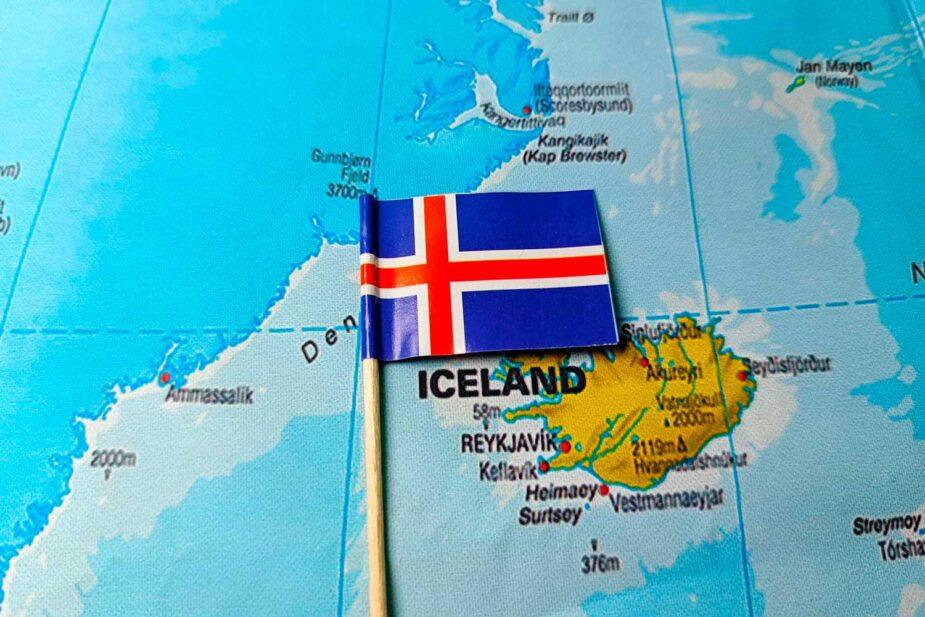
A residence permit in Iceland (original: dvalarleyfi á Íslandi) is a document for foreigners who intend to stay in the country for more than 90 days and have a legal basis for doing so (such as employment, studies, missionary work, family, or humanitarian reasons). Residence permits are issued for 1 to 4 years and are usually renewable if all legal requirements are met. Iceland ranks among the top 10 countries in terms of quality of life, with the average gross salary reaching up to €7,000 per month. Permanent residence can be obtained after approximately 4 years of residence, while citizenship is available after 7 years.
A residence permit in Iceland is granted to individuals who have a stable legal source of income (on average €1,700 gross per month), health insurance, are willing to undergo a medical examination upon arrival, and meet legal compliance requirements. Grounds for immigration are very limited: as a wealthy country, Iceland does not offer residence permits for entrepreneurs, real estate buyers, financially independent individuals, digital nomads, or even major investors. According to OECD (Organisation for Economic Co-operation and Development) statistics, only about 2,000 immigrants move to Iceland each year, one-third of whom arrive through family reunification.
These statistics do not include citizens of EEA countries, who can stay in Iceland for an unlimited period without the additional requirements imposed on other foreigners. You may also obtain a second passport in one of the European Economic Area countries within 4–12 months, immigration lawyers can provide more details.
Advantages of Obtaining an Iceland Residence Permit
Icelandic residency allows you to stay in the country longer than under a Schengen visa or visa-free regime, typically from 12 months to 4 years, depending on the reason for immigration. Residence permit holders enjoy privileges not available to tourists, including access to the labor market (in most cases), the right to family reunification (subject to conditions), extended healthcare coverage (depending on insurance), and social support (based on status). Additionally, a residence permit offers the following benefits:
- visa-free travel within the Schengen Area and EFTA countries (up to 90 days within each 180-day period);
- access to education at all levels (from primary to higher education) for both the applicant and their children;
- participation in integration courses (sometimes state-funded) to facilitate adaptation to society;
- the ability to open accounts in major European banks, which often do not serve non-residents;
- the prospect of obtaining permanent residence and eventually acquiring a strong EEA passport through naturalization.
Learn more about the chances for fast, easy and guaranteed obtainment of second citizenship
Submit an application form and we'll get back to you!
Who Can Apply for an Iceland Residence Permit and Under What Conditions
The rules for obtaining temporary residence status in Iceland are governed by Act No. 80, Lög um útlendinga (“On Foreigners”). The authorities are primarily interested in attracting potential workers, highly qualified individuals or those whose professions are in demand in the local labor market (such as tourism, construction, and healthcare). For example, immigrants with a university degree and an employment contract may immediately obtain a residence permit for up to 4 years, followed by eligibility for permanent residence. For other foreigners, relocation is more challenging, there are few legal grounds, and all require meeting basic conditions:
- financial stability — income equal to or exceeding the subsistence minimum, approximately €1,700 per month (as of 2026);
- satisfactory health condition — verified through a medical examination within 2 weeks of arrival;
- valid health insurance — for at least 6 months with coverage starting from ISK 2 million (approximately €14,000);
- law-abiding behavior — assessed individually; even a criminal record abroad may lead to refusal.
The purpose of stay must correspond to the type of residence permit requested, otherwise, the permit may be revoked prematurely. The most common immigration grounds are outlined below.
Employment
You can apply for a residence permit based on employment in Iceland in the following cases:
- Specialized skills.
Relocation is possible for highly qualified professionals with higher education confirmed by a diploma. - Labor shortage.
Icelandic companies may recruit foreign workers without university degrees if their profession is in shortage on the island. - Sports achievements.
Authorities welcome athletes and coaching staff, provided they have a contract with a local club. - Cooperation agreements.
This refers to short-term relocation for specialized work, such as research projects.
Employment-based relocation is only possible with approval from the Directorate of Labour, which evaluates whether hiring a foreign worker is justified or if the vacancy can be filled locally. If you change employers, a new permit must be obtained.
Study
Students enrolled in Icelandic universities may obtain a residence permit if their admission is officially confirmed. Studies must be full-time, including participation in exchange or internship programs. The required financial support remains at least €1,700 per month. It is also necessary to pay for the first year of study before applying for a residence permit.
Part-time work (up to 50%) is allowed with a permit from the Directorate of Labour, provided academic performance is maintained.
A student residence permit does not directly lead to permanent residence. However, graduates may apply for a permit to search for employment or register as self-employed. This permit is issued for up to 3 years, after which it can be converted into a standard work or self-employment residence permit, eventually leading to permanent residence and citizenship. Only up to 2 years of study-based residence count toward permanent residence eligibility.
Family Reunification
Family members of Icelandic citizens, as well as holders of certain types of residence permits or permanent residence, may relocate to Iceland. Reunification is granted to:
- legally married spouses or registered partners (or de facto partners with at least 12 months of cohabitation);
- minor unmarried children;
- elderly parents (aged 67+).
Other relatives may also be granted residence if they are dependent or require care from the sponsoring family member.
To obtain a residence permit, the host must assume financial responsibility and provide accommodation. The required income depends on family composition, approximately €2,800 for spouses and €855 for each additional adult family member. Additional requirements for children under 18 are not strictly regulated.
Refugee Status
Iceland is a signatory to the Refugee Convention, allowing individuals to seek humanitarian protection. This applies to those who can provide substantial evidence of persecution in their home country or who come from regions affected by armed conflict. Protection may also be granted to victims of human trafficking or labor exploitation, or in cases where returning home is not possible for serious reasons.
According to OECD data, Iceland received around 1,900 asylum applications in the most recent reporting year, but only about 12% were approved. Authorities strictly enforce the Dublin Regulation, under which asylum seekers must apply for protection in the first safe country they enter. Final decisions are made by migration authorities, the police, and the Directorate of Human Rights.
Other Grounds
Less common immigration pathways to Iceland include:
- participation in the Au Pair program (for individuals aged 18–25, with partial financial support);
- volunteer work in accredited European organizations (charitable basis, but financial requirements still apply);
- special ties to Iceland (typically for those who have lived in the country for at least 2 years and are well integrated);
- religious activities (as monks, missionaries, or clergy of recognized churches);
- temporary employment (such as business assignments, seasonal work, or international transfers);
- other exceptional circumstances considered legitimate grounds for staying in the country without harming its interests.
Most of these permits are not considered immigration pathways, meaning they do not lead to permanent residence or citizenship. Missionaries are an exception, although their access to the labor market is limited and they cannot apply for family reunification.
Relocation for EEA Citizens
Iceland is part of the European Economic Area, so citizens of EEA countries have the right to reside in the country indefinitely. In this case, a standard residence permit is not required, it is sufficient to declare the intention to stay longer than 90 days and register an address with the migration authorities.
There is no need to justify the purpose of stay, prove financial means, or meet other requirements applicable to non-EEA foreigners. Relocation with family members is also possible, non-EEA family members can obtain residence permits under a simplified procedure.
In some EEA countries, such as Romania, Slovenia, and Bulgaria, citizenship can be obtained through official state procedures within 4–6 or 12–14 months. These processes do not require exams, prior residence permits, or investment. Consulting with legal experts can help you choose the most suitable program for your situation.
Process of Obtaining a Residence Permit in Iceland
As a rule, the first Icelandic residence permit is applied for from your country of residence. An exception applies to citizens of countries that have visa-free agreements with Iceland. The process of obtaining residency status consists of five stages:
- Preparation of information and documents.
You need to determine the purpose of your immigration, review the current requirements for applicants, and assess your eligibility (including financial capacity). After that, a set of documents is prepared according to the chosen grounds. - Submission of the application to the Directorate of Immigration.
The residence permit application form, along with the supporting documents, must be sent by mail to the Icelandic Directorate of Immigration. An administrative fee for processing the application must also be paid. - Obtaining a national visa (type D).
If the application is approved, the Icelandic consulate will issue a long-term visa for entry into the country. For those already legally present in Iceland or eligible for visa-free entry, the procedure is simpler, you can apply directly for a residence permit at any regional office of the Directorate of Immigration (by submitting documents by mail or placing the application in a designated submission box). - Relocation and completion of formal procedures.
With a national visa, you must enter the country and, within 14 days, undergo a mandatory medical examination to confirm the absence of diseases that could pose a public health risk. You must also register your place of residence (address registration). - Issuance of the temporary residence card.
At the final stage, you need to visit the immigration office to have your photograph taken and fingerprints collected. A residence permit card will then be issued in the form of a plastic ID. It does not replace a travel document (passport). You will be notified by email when it is ready, and it must be collected in person from the office where you applied.
Documents Required for an Iceland Residence Permit
To obtain a residence permit in Iceland, the following documents must be submitted to the authorities:
- a completed standard application form signed by the applicant;
- original and copies of an identity document (usually a passport);
- a recent color photograph (3.5 × 4.5 cm);
- health insurance valid for at least 6 months with coverage of no less than €14,000;
- a criminal record certificate from the country of current residence;
- proof of payment of the state fee for application processing;
- confirmation of a sufficient source of income;
- for employment-based immigration — approval from the Directorate of Labour;
- civil status documents (marriage certificate, children’s birth certificates, if applicable);
- a medical certificate confirming satisfactory health condition.
Standard documents must be supplemented with additional ones depending on the immigration pathway, for example, an employment contract, a university admission letter, or an Au Pair agreement. All documents must be translated into Icelandic, English, or Norwegian and officially certified (notarized).

Submit an application form and we'll get back to you!
Processing Time and Cost of an Iceland Residence Permit
According to the Icelandic Directorate of Immigration, the initial residence permit is typically processed within 8–10 months. The final processing time depends on the workload of government authorities. It is important to submit a complete and accurate application, as additional requests from authorities may significantly delay the process.
Processing times also vary depending on the reason for relocation, for example, employment-based applications are usually prioritized and reviewed within approximately 3–4 months. You can check the status of your application on the official website of the immigration authorities.
The validity period of a residence permit depends on the purpose of stay. Family-based permits are typically issued for 2 years, while work permits may be valid for up to 4 years. Short-term stays without long-term settlement intentions (such as for interns or domestic helpers) are usually approved for up to 1 year.
State fees also vary depending on the immigration basis. Current fees for the initial residence permit in 2026 are typically provided in official tables by the authorities.
| Residence Permit Category (initial) | Cost (€) |
| Family reunification | 415–760 |
| Education | 485 |
| Employment | 553 (276 for youth) |
| Missionary/volunteer activities | 276 |
| Au Pair program | 830 |
| Special reasons / legitimate purposes | 276 |
| International protection for family | 415–622 |
Additional costs include a type D visa (€57, if required), the residence permit card (€55), as well as notary and translation services and legal assistance.
Renewal of Status and Obtaining Permanent Residence in Iceland
Almost all types of residence permits can be renewed if the reason for staying in Iceland remains valid. Applications must be submitted online to the Directorate of Immigration, including scanned documents, an electronic application form, and proof of payment of the state fee. The request must be filed before the current residence card expires, but no earlier than 60 days prior to its expiration. The administrative fee ranges from €276 to €830, depending on the category. A decision on renewal is typically made within 3 months, after which a new residence card is issued.
Permanent residence can be obtained after 4 years of continuous residence in Iceland under certain types of residence permits, such as employment, family reunification, humanitarian, or missionary grounds. Additional requirements include successful completion of an Icelandic language course (at least 150 hours).
Citizenship through standard naturalization can be applied for after at least 7 years, provided the applicant passes a language exam, demonstrates financial stability, and maintains good conduct.
By obtaining citizenship of another EU country through a simplified procedure, you may reduce the timeline to just 4–12 months without going through the full naturalization process (visa → residence permit → permanent residence → passport). After that, relocating to Iceland for permanent residence will not require additional documentation.

Individual selection of immigration program
Get more information about the peculiarities of immigration to the EU at a free consultation

Reasons for Refusal or Revocation of a Residence Permit
A residence permit may be denied to applicants who lack sufficient financial means, have criminal records within the past 5 years, are associated with dangerous organizations, or fail to pass the required medical examination. Applications may also be rejected if there have been prior violations of Schengen migration rules. More formal grounds for refusal include incorrectly submitted applications or incomplete or improperly prepared document packages.
A residence permit may be revoked before its expiration if you leave the country for 3 months or longer, fail to comply with the stated purpose of stay (for example, entering for studies but working full-time), or violate local laws. The status also becomes invalid if it is discovered that it was obtained based on false or incomplete information about the applicant. Consulting immigration lawyers can help avoid procedural mistakes.
Immigrant Reviews on Obtaining a Residence Permit in Iceland
Immigrants in Iceland highlight both advantages and disadvantages of relocation. Many appreciate the high salaries, excellent environmental conditions, beautiful nature, and opportunities to enroll children in European schools and universities. English is widely spoken on the island, so it is possible to manage without Icelandic at first. The local population is generally friendly toward newcomers, although not always very open socially.
Among the disadvantages frequently mentioned is the difficulty of obtaining a residence permit. Relocation is typically feasible for highly qualified specialists, professionals in shortage occupations, or family members of local residents. Universities are expensive, making them a less common choice for students. For full integration and transition to permanent residence and citizenship, knowledge of Icelandic, considered a difficult language, is essential.
Where It Is Easier to Obtain a Residence Permit: Alternative Options
Other EEA countries are less demanding toward immigrants. For example, Spain offers residence permits for financially independent individuals and digital nomads; Latvia welcomes foreign investors and property buyers; Slovakia provides business residence permits through sole proprietorships with relatively low costs. However, none of these options directly facilitate relocation to Iceland or guarantee long-term residence in the European Union.
For successful and sustainable immigration to Europe with your family, it may be worth considering obtaining a second passport in countries such as Romania, Slovenia, or Bulgaria. Requirements for these programs are minimal: applicants must be over 18, have no criminal record, and submit a properly prepared application. Citizenship in an EEA country can be obtained within 12–14 months, depending on the procedure, and you can wait for the decision from anywhere.
Immigration lawyers can provide detailed information about suitable residency and citizenship programs in the EEA during a free consultation. With step-by-step professional support, obtaining a new status becomes faster, easier, and more cost-effective.
Submit an application form and we'll get back to you!
About the author

Diane Weber is an international law specialist with 10 years of legal practice experience. Her portfolio includes successful stories of citizenship in different European Union countries under simplified procedures. Diana provides detailed advice and helps many people to achieve their immigration goals in a short period of time, including resolving visa issues, assisting in obtaining residence permits and citizenship in the EU countries. In her blog, Diana Weber enjoys providing readers with detailed information about the features of most popular programs for obtaining a second passport.
No comments