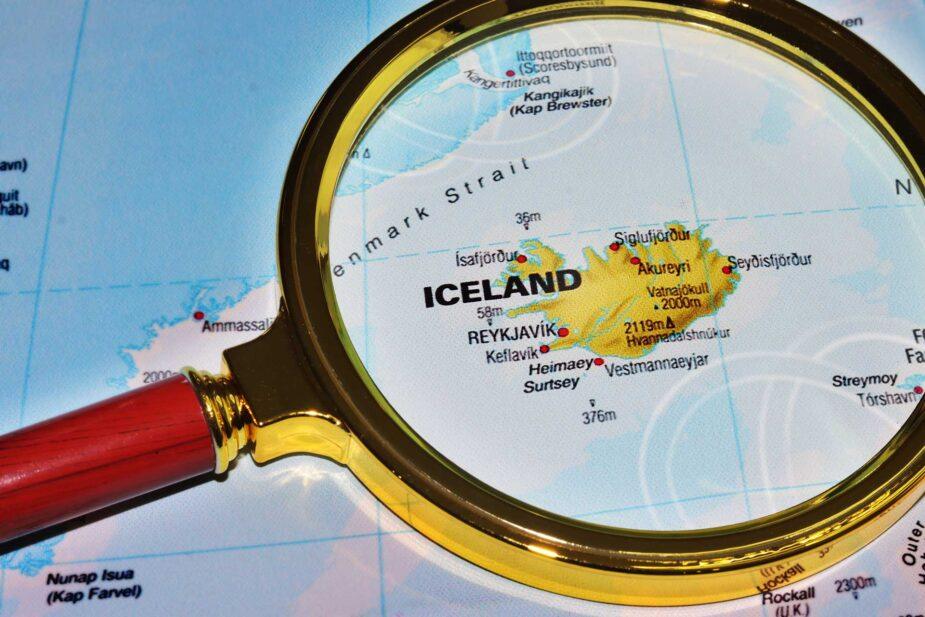
Permanent residence in Iceland is a legal status that allows a foreign national to live in the country without time limitations. For many people, moving to Iceland and immigrating there becomes an opportunity to improve their quality of life, secure stable employment, and gain access to a well-developed social system.
Permanent resident status grants foreigners nearly the same rights as Icelandic citizens, except for participation in elections. Typically, relocation follows a step-by-step process: first obtaining a visa, then a temporary residence permit, and after 4 years of residence, applying for permanent status.
A viable alternative to the lengthy permanent residence process may be obtaining citizenship in one of the European Union countries. Although Iceland is not part of the EU, it is a member of the European Economic Area (EEA) and the European Free Trade Association (EFTA). Therefore, EU citizens can freely work, study, open businesses in Iceland, and obtain permanent residence through a simplified procedure. It is possible to obtain a passport of an EU country through simplified programs in as little as 12 months.
Why People Move to Iceland
Immigration to Iceland attracts people due to its high quality of life, safety, and stable economy. The key advantages of relocation include:
- High standard of living and economic stability — the country ranks among the top 5 globally in quality of life indices;
- Developed social support system — government spending on social services exceeds 25% of GDP;
- High-quality healthcare and education — life expectancy in Iceland is around 83 years;
- Strong safety levels — the country ranks 18th globally among 150 analyzed nations;
- Clean environment and low population density — fewer than 4 people per square kilometer, one of the lowest rates in Europe.
Thanks to these factors, moving to Iceland is worth considering for those who value stability. However, it is important to consider not only the advantages but also the drawbacks of living in Iceland. Common disadvantages include the high cost of housing and food, a challenging climate, and a complex language that may make adaptation difficult in the early stages. Nevertheless, many reviews from immigrants show that over time these factors become less significant and are outweighed by the country’s high level of safety and overall stability.
Learn more about the chances for fast, easy and guaranteed obtainment of second citizenship
Submit an application form and we'll get back to you!
Main Ways to Immigrate to Iceland
Those planning to move to Iceland must choose a legal basis for residence. The country offers several types of permits issued by the Icelandic Directorate of Immigration, which determine the conditions, duration of stay, and eligibility for obtaining permanent residence in the future.
You can move to Iceland on the following grounds:
- Employment.
Residence permits are granted to foreign nationals who have received a job offer in the Icelandic labor market. There are several categories of work permits: for highly qualified specialists, workers in shortage occupations, athletes, or employees under service contracts. This type of residence permit is also often chosen by foreigners interested in business immigration, as Iceland does not offer a “classic” residence permit through company formation like many EU countries. The initial permit is usually issued for about 1 year and can be extended. - Family reunification.
A residence permit may be granted to close relatives of a person who already legally resides in Iceland. Eligible family members include spouses or cohabiting partners, children under 18, and in some cases parents over 67. The applicant must prove the family relationship and sufficient financial means to support the family. - Education.
Foreign students can obtain residence permits based on enrollment in a university or other educational institution. A student permit is typically issued for up to 1 year and can be renewed. If a student leaves the country for more than 3 consecutive months, the permit may be revoked. In some cases, students are allowed to work, but no more than 22.5 hours per week during the academic year. After graduation, the student residence permit may be extended for up to 3 years to search for employment related to their field of study. However, it is important to note that time spent under this category is only partially counted toward permanent residence — usually no more than 2 years. - Other grounds.
There are also special categories of residence permits, including volunteering, cultural or scientific projects, religious activities, sports careers, as well as humanitarian programs and refugee status. Each of these categories is assessed individually in accordance with immigration law.
Requirements for Obtaining Permanent Residence in Iceland
Relocating to Iceland for permanent residence is a step-by-step process. First, the applicant obtains a national category D visa or enters the country on another legal basis and applies for a residence permit.
Conditions for Obtaining Permanent Residence
To obtain permanent residence, it is generally required to live in Iceland continuously on a legal basis for at least 4 years. However, different timelines apply to certain categories. For example, a spouse or registered partner of an Icelandic citizen may apply after 3 years of residence. Children of Icelandic citizens can obtain permanent status after 2 years of residence with a valid permit.
Holders of humanitarian permits, including refugees from Ukraine, can apply for permanent residence only after 6 years. At the same time, residence under a student permit is counted only partially — usually no more than 2 years, regardless of the actual duration of studies. Therefore, when choosing a relocation pathway, it is important to select a suitable long-term basis from the outset.
Applicants must prove lawful residence in the country, a stable income sufficient to live without relying on social assistance, and no serious legal violations. Authorities also consider the availability of permanent housing, compliance with tax obligations, knowledge of the national language, and a high level of integration into society.
The requirements for obtaining permanent residence in Iceland are relatively strict: applicants must live in the country for 2–4 years (depending on category), demonstrate financial stability, integration, and meet other criteria. At the same time, there are EEA countries where immigration procedures are significantly simpler. International immigration lawyers can help assess your situation, choose the appropriate program, and prepare your application in accordance with legal requirements.
Documents Required for Relocation
To move to Iceland and obtain permanent residence, applicants must submit a form and a set of documents confirming identity, lawful residence, and compliance with requirements:
- a completed permanent residence application form;
- a valid passport or other identity document;
- a valid residence permit in Iceland;
- proof of continuous residence in the country for the required period;
- documents confirming stable income or sufficient financial means;
- a certificate of completion of an Icelandic language course or proof of passing a language test;
- additional documents if required by immigration authorities (e.g., marriage or birth certificates if family members are relocating).
All documents must be valid at the time of submission. If they are not issued in English or a Scandinavian language, an official translation is required.
Financial Requirements
To relocate to Iceland, applicants must demonstrate sufficient financial means to support themselves and their family members without relying on social assistance. Proof typically includes an employment contract, income statements, bank statements, or other documents confirming a stable source of funds.
The minimum income level is set by the government and is regularly updated. As of 2026, it is approximately €1,720 per month for a single applicant and €2,750 per month for a married couple.
When applying for permanent residence, the following expenses should also be considered:
- government application fee: approximately €400–€430 for an adult and €200–€215 for a child;
- residence permit issuance and renewals during previous years: around €485–€765, depending on the basis;
- translation and notarization of documents: approximately €50–€200, depending on the volume;
- Icelandic language course: about €277 (language knowledge may be waived for applicants over 65 or those unable to take the test for medical reasons).
Separate health insurance is usually not required when applying for permanent residence if you are already living in Iceland with a valid residence permit and are covered by the national healthcare system. However, during the first months after relocation, foreign nationals must have private health insurance until they gain access to the public system. The average cost is €270–€700 for 6 months, depending on the provider and coverage.
In addition to administrative expenses, applicants should consider the general cost of living in Iceland, including rent, food, and daily expenses. On average, living costs (excluding rent and utilities) are around €1,520 per month, while renting a one-bedroom apartment ranges from €1,715 to €2,025 per month, depending on the area.
Process of Obtaining Permanent Residence in Iceland
Obtaining permanent residence in Iceland is carried out through the immigration authorities and includes several sequential stages:
- Checking eligibility requirements.
Before starting the relocation process, it is necessary to ensure that you meet the basic conditions for obtaining permanent residence (continuous residence in the country with a suitable residence permit, knowledge of the language, availability of housing and stable income, and no legal issues). - Preparation and collection of documents.
It is important to ensure that all information in the documents is up to date and, if necessary, translated into English or Icelandic. An incomplete application package or errors in documentation may lead to delays or requests for additional information. - Submitting the application.
The application is submitted to the Icelandic Directorate of Immigration via the government service portal or in paper form by post. When submitting, the applicant must complete the form and pay the processing fee. After submission, confirmation is sent via email or appears in the applicant’s online account. - Application review by immigration authorities.
The immigration service reviews whether the applicant meets all requirements. If necessary, additional documents or clarifications may be requested. These must be provided within the specified timeframe to avoid delays or suspension of the application. - Receiving the decision and obtaining status.
If approved, the applicant is granted permanent resident status in Iceland, which allows living in the country without the need to renew a residence permit. A residence card is then issued, which must be renewed periodically (valid for 5 years).
If an application is rejected, it is important to review the reasons stated by the immigration authorities. In most cases, the decision can be appealed to the Immigration Appeals Board or a new application can be submitted after addressing the reasons for refusal — for example, after confirming a longer period of residence, sufficient income, or complince with other requirements. Until the issue is resolved, the applicant can usually continue residing in Iceland based on a valid residence permit.
Processing times for permanent residence applications vary depending on the complexity of the case and the workload of immigration authorities. On average, document review and decision-making take several months, but permanent residence applications are typically processed longer than standard residence permit extensions, as authorities review a longer period of residence and compliance with all requirements. In some cases, the process may take 6–12 months, especially if additional verification or documentation is required.
If you hold an EU passport, relocating to Iceland becomes significantly easier — without visas, complex procedures, and with immediate access to the labor market. In addition, some countries offer programs that allow obtaining EU citizenship within 6–12 months, opening even more opportunities for free movement and living across Europe. Immigration specialists can help determine whether you qualify for simplified EU citizenship pathways.
Living in Iceland After Obtaining Permanent Residence
With permanent resident status, a foreign national can live in Iceland indefinitely without the need to renew a residence permit, work legally, run a business, and access the social security system. Permanent residents also have access to healthcare, educational institutions, and other public services on par with Icelandic citizens.
However, along with these rights come certain obligations. A foreign resident must comply with national laws, renew their residence card on time, maintain actual residence in Iceland, fulfill tax obligations, and comply with address registration requirements. Prolonged absence from the country (more than 18 months within a 4-year period) may lead to the revocation of permanent residence.
After living in Iceland for 7 years and holding permanent residence, a foreign national is eligible to apply for citizenship. In some cases, the law provides shorter residence requirements. For example, spouses of Icelandic citizens may apply after 4 years of residence, while registered cohabiting partners — after 5 years. Refugees and stateless persons can apply after 5 years. If one of the applicant’s parents is an Icelandic citizen, the application may be submitted after 2 years. Former Icelandic citizens may restore their citizenship after 1 year of residence in the country.

Submit an application form and we'll get back to you!
Key Destinations for Relocation
When planning to move to Iceland, it is important to choose the region of residence in advance. Most jobs, educational institutions, and business opportunities are concentrated in several major cities. The most popular cities for relocation include:
- Reykjavík.
The capital and largest city of Iceland. It offers the widest range of job opportunities, international companies, and educational institutions, making it easier to find employment, start a business, or continue studies. - Kópavogur.
The second-largest city, located near the capital. Suitable for those who prefer a quieter environment while still having access to Reykjavík’s job market. It has well-developed infrastructure and slightly more affordable housing. - Hafnarfjörður.
A city in the capital region with convenient transport connections. Ideal for family life due to its safe environment, good schools, and relaxed pace of living. - Akureyri.
The largest city in northern Iceland. Tourism, education, and small businesses are actively developing here. The cost of living is generally lower than in the capital. - Keflavík.
A city located near the international airport. The region offers many job opportunities in tourism, services, and logistics, as well as convenient connections for international travel.
Risks of Illegal Residence
Before deciding to move to Iceland for permanent residence, it is important to understand and comply with immigration laws. Authorities strictly monitor foreigners’ compliance with residence regulations, and violations may lead to refusal to grant or extend a residence permit.
Applications may be rejected for several reasons. The most common include submitting an incomplete set of documents, providing false information, lack of a verified source of income or housing, and failure to meet continuous residence requirements. Serious legal violations or non-compliance with the conditions of a previously issued residence permit can also result in refusal.
Illegal residence can have serious consequences. Immigration authorities have the right to revoke an existing residence status, require the individual to leave the country, and impose a ban on re-entry. Violations of immigration rules may significantly complicate obtaining visas and residence permits in the future.

Individual selection of immigration program
Get more information about the peculiarities of immigration to the EU at a free consultation

Why Professional Assistance Matters in Immigration
Immigration to another country requires not only document preparation but also a clear understanding of legal procedures, timelines, and regulatory requirements. Many foreigners begin researching the process on their own when planning to move to Iceland for permanent residence, but in practice often find that immigration procedures are more complex than they initially appear. Choosing the wrong basis for a residence permit or making mistakes in documentation can lead to refusal and the need to restart the process.
This is why professional assistance is in high demand. International immigration specialists help assess an applicant’s situation, select the most appropriate immigration pathway, and prepare documents in full compliance with legal requirements.
If you are planning to move to Iceland, it is important to understand that the path to citizenship can take many years. However, within the European Union there are programs that allow you to obtain a stable immigration status much faster. In some EU countries, citizenship can be obtained in as little as one year, provided certain conditions are met and documents are properly prepared.
Our international law specialists provide professional assistance with relocation and selection of the optimal immigration program. We will help assess your situation, choose the most suitable country, and support you throughout the entire citizenship application process.
About the author

Diane Weber is an international law specialist with 10 years of legal practice experience. Her portfolio includes successful stories of citizenship in different European Union countries under simplified procedures. Diana provides detailed advice and helps many people to achieve their immigration goals in a short period of time, including resolving visa issues, assisting in obtaining residence permits and citizenship in the EU countries. In her blog, Diana Weber enjoys providing readers with detailed information about the features of most popular programs for obtaining a second passport.
No comments