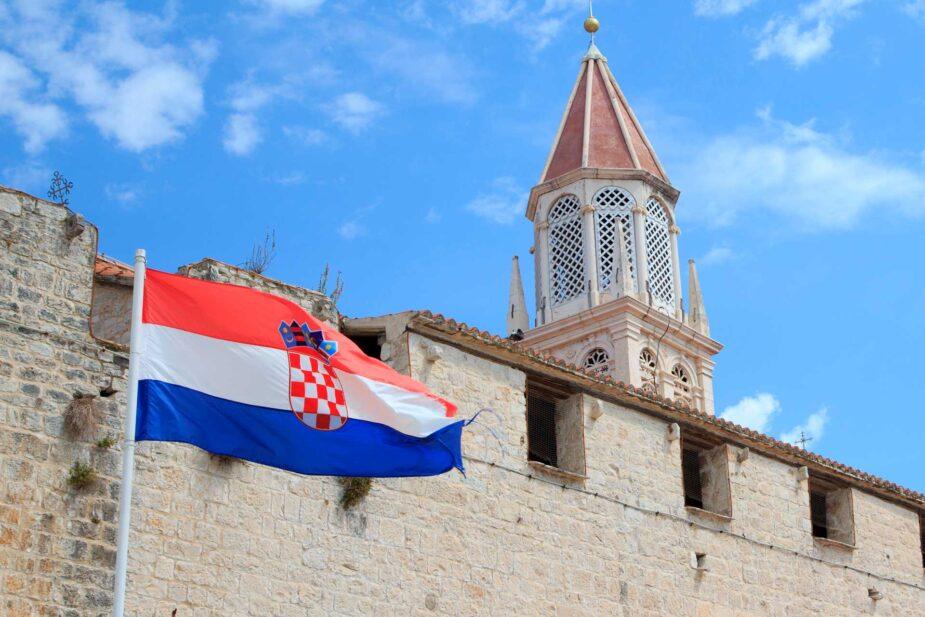
A Croatian residence permit is an official document that grants foreign nationals the right to stay in the country for a specific purpose. Croatia attracts immigrants with its mild Mediterranean climate, Adriatic coastline, and combination of a comfortable lifestyle with opportunities for employment and business. Tourism is one of the country's key economic sectors, supporting demand for workers and the development of service-related businesses. An additional advantage is Croatia's membership in the European Union, as well as its participation in the Schengen Area and the Eurozone. This makes living and traveling within Europe more convenient.
A residence permit in Croatia is granted to those who intend to stay in the country for more than three months. Such a permit may be obtained for studies, family reunification, employment, scientific research, or humanitarian reasons. After five years of lawful residence in Croatia, it is possible to apply for long-term resident status, and after another three years, provided that the legal requirements are met, applicants may become eligible for Croatian citizenship.
Benefits of Obtaining a Croatian Residence Permit
A Croatian residence permit grants foreign nationals privileges that are not available to foreigners without this status. These expanded opportunities arise from the right to work, access to social services, and the ability to establish and operate a business. Residents can integrate more easily into society while gaining prospects for permanent residence and, eventually, citizenship. The main benefits of holding a Croatian residence permit include:
- the right to work for most categories of applicants;
- the opportunity to register and operate a business under more favorable conditions, including a 12% corporate income tax rate for small businesses;
- access to the services of financial institutions in Croatia and throughout the European Union;
- the opportunity to study at Croatian and other European universities, with Erasmus+ programs allowing students in Croatia to study in EU countries;
- protection and assistance from the social welfare system, including benefits for unemployed persons, pensioners, and other vulnerable groups;
- the possibility of purchasing real estate through a simpler procedure compared with foreigners who do not hold a residence permit;
- access to healthcare services in Croatia and European health insurance coverage;
- the prospect of obtaining permanent residence and, subsequently, Croatian citizenship;
- the right to travel freely throughout the Schengen Area;
- a stable legal status, eliminating the need to extend a visa or concerns about deportation.
It is possible to obtain a European Union passport in as little as 4 months if you hold the citizenship of any EU member state. Our immigration specialists can provide more information about simplified procedures for acquiring status. They will also analyze your individual situation and assess your eligibility for an accelerated program.
Learn more about the chances for fast, easy and guaranteed obtainment of second citizenship
Submit an application form and we'll get back to you!
Who Can Apply for a Croatian Residence Permit and Under What Conditions
At the beginning of 2025, Parliament introduced amendments to the current Foreigners Act, aimed at improving the regulation of the residence and employment of foreign nationals in the Republic of Croatia. The primary objective of these changes was to align Croatian legislation with the new European Union Blue Card Directive.
This residence permit is issued to highly qualified professionals and grants them the right to live and work in the country. Before the amendments, the Blue Card was issued for 2 years; it is now valid for 4 years. The changes are intended to attract more highly skilled specialists while introducing stricter rules for employers.
To obtain a Croatian residence permit, applicants must meet several requirements:
- provide documentary proof of the purpose of their stay;
- demonstrate sufficient financial means to support themselves while living in Croatia;
- obtain valid health insurance;
- have no criminal record, entry bans (including in the Schengen Information System), and pose no threat to public order or national security.
When completing the residence permit application, applicants must hold a passport that remains valid for at least 3 months longer than the validity of the residence permit being requested. Residence permits may be issued for various purposes, with the validity period depending on the specific ground for residence. The main categories are outlined below.
Employment
The legal basis for employment is the combined residence and work permit, which allows a foreign national to live and work in Croatia. As a rule, this permit is issued for up to 1 year. Seasonal workers are subject to a special regime: permits may be granted for up to 90 days or up to 6 months per year, depending on the type of employment. These permits require the issuance of an employee registration certificate.
Residence permits are available to foreign nationals who can provide documentary evidence of employment, an intra-company transfer, volunteer work, an internship, or a seasonal employment contract. Applicants are permitted to work only in the positions specified in their residence permit.
An important stage of the process is the labour market test and obtaining an opinion from the Croatian Employment Service. The employer must request this online test, which is conducted within 15 days to determine whether suitable local candidates are available for the position. If no suitable workers are found, the employer may hire a foreign national.
Family Reunification
A temporary residence permit may be granted to foreign nationals who are family members of Croatian citizens, Croatian residents, or persons granted international protection. Family members include spouses, registered life partners, minor children, and parents or adoptive parents of Croatian citizens under the age of 18. Applicants must provide documentary proof of the family relationship, such as birth certificates, adoption documents, or marriage certificates. Close relatives and spouses of Croatian citizens are not required to prove sufficient financial means.
Scientific Research
Residence permits may be granted to applicants who hold a hosting agreement or admission contract with an institution accredited to host researchers for a period of 5 years. The residence permit is generally valid for up to 1 year, or up to 2 years for participants in EU programs. It also includes the right to carry out teaching activities at the host institution.
Secondary Education
Residence permits are available to children attending secondary education in Croatia or participating in recognized regional or national student exchange programs. Applicants must provide parental consent, as well as proof that accommodation has been arranged with a host family or educational institution.
EU Long-Term Resident Status
Residence permits are available to foreign nationals who already hold EU long-term resident status in another Member State. The purpose of residence in Croatia may include employment, self-employment, education, or vocational training. Applicants in this category are also entitled to family reunification.
Digital Nomad Status
Residence permits are available to foreign nationals working in information and communication technologies who perform services for companies registered abroad and have no employment relationship with Croatian employers. The permit is valid for 1 year and may be extended if the conditions for residence continue to be met. Applicants must provide an employment contract or service agreement with a foreign employer. If they operate their own business, they must submit a company registration certificate.
Higher Education
Residence permits are issued to students enrolled at Croatian higher education institutions. The permit is generally valid for up to 12 months or until the end of the academic year, with the possibility of renewal. Students participating in EU mobility programs may receive residence permits for up to 2 years. Residence permits are also available for students undertaking internships of up to 90 days. Residence permit holders may work without obtaining an additional work permit, provided they work no more than 20 hours per week.
Life Partnership
Residence permits are available to life partners of Croatian citizens, Croatian residents, foreign nationals holding Croatian residence permits, refugees, and beneficiaries of subsidiary protection. Applicants in this category are not required to demonstrate sufficient financial resources. The residence permit is valid for up to 1 year and may be renewed.
Humanitarian Grounds
Residence permits may be granted to applicants entering Croatia for humanitarian protection or assistance.This category includes victims of human trafficking, unaccompanied minors, and persons granted refugee status. Residence permits are also available to applicants cooperating with competent authorities in criminal proceedings against employers who hired them illegally.
Humanitarian grounds also include members of the Croatian diaspora who hold foreign citizenship or are stateless. Applicants in this category must provide a certificate issued by the government authority responsible for relations with Croats living abroad.
Citizens of the European Union may relocate to Croatia much more easily without having to search for or prove specific grounds for residence. Under Directive 2004/38/EC, they are entitled to permanent residence, free access to employment, the right to conduct business, and family reunification.
The Process of Obtaining a Croatian Residence Permit
In most cases, obtaining a Croatian residence permit follows a standard procedure. The main exception applies to foreign nationals entering the country for employment purposes, as they must also obtain a work permit. In general, the process consists of the following steps:
- Submitting the Residence Permit Application.
The applicant submits the application either to a Croatian consulate (if a visa is required to enter the country) or to the local police administration (if entry without a visa is permitted). To obtain a visa, applicants must visit the official website of the Croatian consulate, complete the application form, and provide biometric data during their appointment. The application may be submitted no earlier than 2 months and no later than the start date of the requested residence permit. - Obtaining a Long-Stay Visa.
Once the residence permit application has been approved, the Croatian consulate issues a Type D visa, allowing the applicant to enter Croatia and complete the residence permit process. The visa is valid for up to 6 months and permits multiple entries for the purpose of registering an address and applying for the residence permit card. - Registering Residence and Applying for the Residence Permit Card.
After arriving in Croatia, the applicant must register with the local police administration within 3 working days. During this procedure, biometric data are collected, and documents confirming the grounds for residence are submitted. Applicants may also be required to provide proof of their residential address in Croatia. - Receiving the Residence Permit Card.
Following successful registration with the police administration, the applicant waits for the residence permit card to be issued. The processing period may vary but generally does not exceed several weeks. Once the card is ready, the applicant receives a notification by email.
Documents Required for a Croatian Residence Permit
When visiting the Croatian police administration or consulate to apply for temporary residence, applicants must prepare the following documents:
- a valid passport;
- proof of the legal grounds for residence in Croatia;
- health insurance covering medical expenses of at least EUR 30,000;
- proof of sufficient financial resources, such as an income certificate or bank statements;
- a criminal record certificate;
- a certificate issued by the Croatian Ministry of the Interior (MUP) confirming the absence of entry or residence bans and the absence of alerts in the Schengen Information System.
All certificates and official extracts included in the application must have been issued no more than 6 months before submission. Applicants should bring both the original documents and copies when filing their application.

Submit an application form and we'll get back to you!
Processing Times and Costs of a Croatian Residence Permit
Depending on the legal basis used to obtain Croatian residence, both the cost of the permit and the processing time may vary. Applicants should prepare the required documents, arrange certified translations into Croatian, and complete notarization, legalization, or apostille procedures where applicable. The estimated costs and processing times are as follows:
| Expense | Cost, (€) | Processing Time, (Days) |
| Long-stay visa (Type D) | 93 | 15–45 |
| Residence permit approval | 46,45 | 30–90 |
| Residence permit card (standard/expedited) | 31,85/59,73 | 14–30 |
| Additional administrative fee for issuing the residence card | 9,29 | — |
| Document translation | 11–60 | 1–3 |
| Document legalization | from 7 | — |
A Croatian residence permit is issued as a plastic biometric card containing the holder's photograph and an electronic chip with personal data. The document enables the competent authorities to verify the foreign national's legal residence status.
Renewing Residence Status and Obtaining Permanent Residence in Croatia
Foreign nationals may extend their legal stay in Croatia by obtaining long-term residence after 5 consecutive years of continuous residence in the country with a temporary residence permit. During this period, absences of up to 10 months in total are permitted, provided that no single absence exceeds 6 consecutive months. Applicants for long-term residence must provide:
- a valid passport;
- a valid residence permit card;
- health insurance;
- proof of sufficient financial means;
- evidence that they do not pose a threat to public order or national security;
- proof of proficiency in the Croatian language and the Latin alphabet.
To demonstrate knowledge of the Croatian language, applicants must pass an examination at one of the accredited institutions. The language test requirement does not apply to preschool children, students who completed their education in Croatia, applicants over the age of 65 who are not employed.
Another option for long-term residence is permanent residence. Permanent residence permits are granted to specific categories of applicants who hold a valid passport and are not considered a threat to public order or national security. Eligible categories include:
- refugees who have held refugee status for 10 years or more and temporary residence for the last 3 years before applying;
- family members and life partners of Croatian citizens who have lived in Croatia for the last 4 years under family reunification or partnership residence permits;
- minor children who have lived in Croatia for 3 years under family reunification, provided that one parent holds permanent or long-term residence;
- members of the Croatian diaspora holding foreign citizenship or who are stateless, officially recognized as returning to Croatia for permanent residence and who have held a residence permit for 3 consecutive years;
- persons who held permanent residence as of 8 October 1991, participated in return, reconstruction, or housing programs, and returned to Croatia intending to reside permanently;
- applicants born and living in Croatia who, for reasons beyond their control, do not possess a residence permit;
- minor children living in Croatia where one parent held permanent or long-term residence at the time of the child's birth, provided the other parent has given consent.
Holders of long-term residence or permanent residence permits enjoy many of the same rights as Croatian citizens, including the right to work without additional permits; access to social security benefits and child allowances; access to tax benefits; access to education and scholarships, with the exception of certain state student grants. The government fee for processing a long-term or permanent residence application is EUR 83.62, while the biometric residence permit card costs EUR 31.85.
Croatian citizenship may be acquired after 8 years of continuous residence at a registered address in Croatia, provided that the applicant renounces their current citizenship where required by law. The government fee for processing a citizenship application is EUR 139.36.
Reasons for Refusal and Revocation of a Croatian Residence Permit
Applicants may be refused a Croatian residence permit if they submit forged documents, provide false information, or fail to provide sufficient documentary evidence supporting their legal grounds for residence in Croatia.
Foreign nationals who already hold a residence permit may lose their status in the following situations:
- an entry ban to Croatia has been imposed or an alert has been issued in the Schengen Information System recommending refusal of entry;
- the holder of a 2-year temporary residence permit remains outside Croatia for more than 180 days in total or for more than 60 consecutive days during a single trip;
- a residence permit granted on the basis of family reunification or a life partnership is found to be based on a relationship that no longer genuinely exists;
- the legal grounds on which the residence permit was issued no longer apply;
- the holder fails to register their place of residence in Croatia within 30 days after receiving the residence permit or voluntarily deregisters their address;
- the holder of a 1-year temporary residence permit stays outside Croatia for more than 90 days in total or for more than 30 consecutive days during a single trip.
To minimize the risk of refusal, applicants should carefully prepare for the procedure, compile a complete set of supporting documents, and fully comply with Croatian immigration legislation.
Since obtaining a Croatian residence permit involves a number of legal requirements and procedural nuances, many applicants choose to seek assistance from experienced immigration lawyers. Professional legal support can help identify simpler and more suitable immigration options while reducing the likelihood of mistakes during the application process.

Individual selection of immigration program
Get more information about the peculiarities of immigration to the EU at a free consultation

Immigrants' Experiences of Obtaining a Croatian Residence Permit
According to many immigrants' reviews, Croatia offers a relaxed lifestyle and a high level of personal safety. Compared with many Western European countries, the cost of housing, services, and groceries is relatively affordable, while local residents are generally welcoming toward foreign nationals. However, immigrants also report several common challenges, including:
- the lengthy and sometimes complicated residence permit application process, which requires extensive documentation;
- difficulties in learning the Croatian language, making integration and employment more challenging;
- waiting times for appointments in the public healthcare system that may extend to several months, leading many immigrants to use private clinics, where consultations typically cost EUR 50–150 per visit;
- participation in educational programs often requires knowledge of Croatian, as English-language instruction is not available for all degree programs.
Easier Alternatives for Immigration
Since obtaining a Croatian residence permit requires considerable effort and acquiring Croatian citizenship generally takes many years, many immigrants choose alternative legal pathways to relocate to Croatia. In 2026, one of the most popular options is obtaining EU citizenship through simplified procedures available in certain Member States.
Accelerated citizenship programs available in Bulgaria, Romania, and Slovenia may be accessible to many categories of applicants. These pathways can allow individuals to obtain EU citizenship in up to 12 months, after which they may relocate to Croatia and enjoy the same rights as other EU citizens.
To learn whether you qualify for one of these immigration options, you can request a free consultation with the company's immigration lawyers. They will assess your individual circumstances and recommend the most suitable strategy for relocating to Croatia as quickly and efficiently as possible.
About the author

Diane Weber is an international law specialist with 10 years of legal practice experience. Her portfolio includes successful stories of citizenship in different European Union countries under simplified procedures. Diana provides detailed advice and helps many people to achieve their immigration goals in a short period of time, including resolving visa issues, assisting in obtaining residence permits and citizenship in the EU countries. In her blog, Diana Weber enjoys providing readers with detailed information about the features of most popular programs for obtaining a second passport.
No comments