Croatian citizenship attracts immigrants who value legal status in the EU, a clear naturalization procedure, and the opportunity to establish themselves in the country through employment, business, family grounds, or ancestry. Croatia has a practical feature that is rare in the region: foreigners with temporary or permanent residence, including digital nomads, can use the state e-Citizens system almost on an equal basis with native residents, gain access to online services, and resolve some administrative matters remotely. This makes the naturalization process fairly convenient.
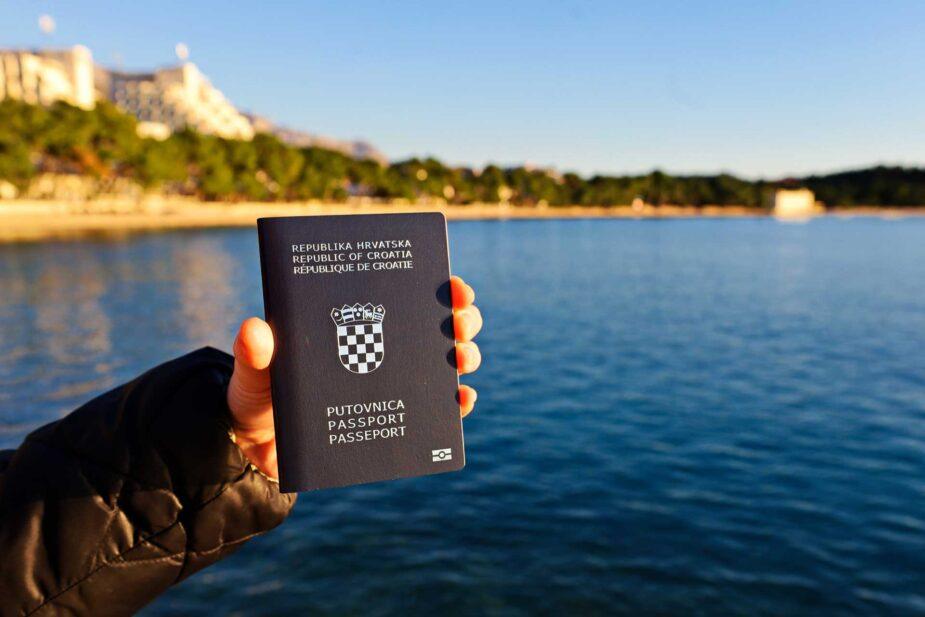
A Croatian passport provides access to the rights of an EU citizen: residence, employment, education, and entrepreneurial activity in the member states. The passport is also attractive to those planning a long-term immigration strategy for their family. Document holders can move freely within the Schengen Area, use the consular protection of other European Union countries abroad, and pass citizenship on to their children.
The Reality in 2026: Laws and Trends
The acquisition of Croatian citizenship is governed by the Citizenship Act. Since the republic is a member of the European Union, its immigration legislation is regularly reviewed and aligned with EU standards. In 2026, status can be obtained in several ways: through repatriation or birth, by naturalization, by marrying a Croatian citizen, or for special merit.
The state is currently interested in attracting highly qualified professionals and actively promotes immigration programs for workers in engineering, medicine, and IT. In most cases, a passport can be obtained only if the applicant has sufficient language proficiency and is financially self-sufficient.
Requirements for applicants seeking an EU passport are currently becoming stricter, which is typical of most European Union countries. Further development of online services for submitting applications and tracking their status is also likely, with the aim of simplifying and accelerating application processing.
Expanded Opportunities: What a Croatian Passport Provides
A Croatian passport offers numerous advantages associated with a European passport. In addition to visa-free movement throughout the member states and the Schengen Area, the status provides access to the following unique benefits:
- obtaining an education with the opportunity to receive priority consideration for student exchange programs and research projects funded by the European Union;
- studying on preferential terms at public universities in Croatia and other EU countries;
- access to unique grants and scholarships, especially in science and the arts;
- the ability to travel visa-free to more than 160 countries worldwide;
- eligibility for social payments, unemployment and pension benefits, and assistance for other vulnerable population groups in accordance with EU standards;
- housing benefits and subsidies for renting or purchasing real estate;
- access to the healthcare systems of all European Union countries, including specialized medicines and treatment;
- the opportunity to use European grants and support from EU funds for the development of small and medium-sized businesses;
- tax benefits for certain types of activity;
- the right to participate in European Union public procurement procedures and gain access to major contracts;
- protection from Croatian diplomatic missions around the world.
Holders of passports from other European Union countries are also entitled to all the benefits available to citizens, which makes it possible to use additional legal routes for relocating to the republic. EU citizenship is available to a wide range of applicants, and our specialists can select the optimal simplified option for you.

Individual selection of immigration program
Get more information about the peculiarities of immigration to the EU at a free consultation

Ways to Become a Croatian Citizen
Croatian citizenship can be obtained through several routes, the most common being naturalization and repatriation. Each method requires the applicant to meet certain conditions and has its own advantages and disadvantages, so the available routes are examined in more detail below.
Naturalization
Citizenship is granted upon application if the applicant is at least 18 years old, has resided continuously in the republic for eight years before submitting the application, and has obtained permanent residence. Knowledge of the Croatian language, culture, and traditions is mandatory. The applicant must have no criminal record and must not pose a threat to national or public security. Acquiring citizenship through this route requires renunciation of the applicant’s previous citizenship.
For certain categories of applicants, the residence-period requirements are relaxed, provided that relocation is based on one of the following grounds:
- education;
- family reunification;
- digital nomad status;
- scientific research;
- employment;
- humanitarian grounds;
- EU residence status.
If one of these grounds applies, foreigners are entitled to enter the country to obtain a temporary residence permit. This is the first step toward permanent residence and citizenship.
Repatriation
A Croatian passport may be obtained by persons of Croatian ethnic origin, who are required to meet only one condition: respect the legal order of the republic and have no debts to the state. Croatian ethnic affiliation must be confirmed through statements made in legal instruments and other public documents. Active participation in the life of the Croatian diaspora abroad is important.
Special Merit
Foreigners who have made a special contribution in their field of activity in the interests of the Republic of Croatia may undergo naturalization without meeting the standard requirements for applicants. They may also obtain status for their spouses on the basis of a residence permit valid for one year. To obtain a passport, it is important to submit a reasoned opinion to the Ministry of the Interior or the relevant central state authority confirming that the Republic of Croatia is interested in granting citizenship to the foreign national.

Croatian Citizenship for Children and Family Considerations
A child may acquire Croatian citizenship by descent if both parents hold Croatian passports at the time of the child’s birth. The rules also apply to a child born in the republic if one parent is a Croatian citizen. If a child from abroad or a stateless child is adopted, Croatian citizenship is also granted in accordance with the provisions of the relevant special law.
Persons born abroad to one Croatian parent may acquire citizenship by descent if they are registered with a Croatian consulate before reaching the age of 21. If a child was born and resides in Croatia on the basis of permanent residence, the child may undergo naturalization. Adult applicants may acquire status in one of the following cases:
- one parent is naturalized as a Croatian or as an emigrant who left Croatia before 8 October 1991 with the intention of permanently residing abroad;
- both parents acquire citizenship by birth;
- one parent acquires citizenship by naturalization while the child resides in the country on the basis of a residence permit;
- one parent is stateless or their status is unknown, while the other parent undergoes naturalization and the child resides abroad.
Foreign applicants who are married to Croatian citizens and have permanent residence undergo naturalization in order to obtain a passport, even if they do not meet the standard requirements.
In 2026, simplified ways of obtaining European Union citizenship remain available in several member states. Lawyers will explain the details during a free consultation.
Step-by-Step Procedure: How to Complete the Path to Citizenship
Obtaining Croatian citizenship is a process that involves meeting a number of conditions and completing several stages in compliance with the law. Naturalization is the most common procedure, so the steps involved are outlined below:
- Document preparation.
After residing in Croatia legally and holding a residence permit for eight years, an applicant may submit a request to acquire citizenship. It is important to prove proficiency in the official language, payment of all fees, the absence of a criminal record, and renunciation of previous citizenship. - Submission of the application.
The application must be submitted to the police department at the applicant’s place of residence, where the relevant form must be completed and the prepared set of documents attached. The processing time depends on the completeness of the file, and in some cases additional documents may be required. - Waiting for the decision.
The case is reviewed by the Ministry of the Interior, after which the applicant receives a decision granting or refusing citizenship. The decision-making period depends on the individual circumstances and varies from case to case. The status of the application can be requested in writing by post or email. - Taking the oath.
To become a Croatian citizen, the applicant must take an oath. After this procedure, the foreign national is entered in the Register of Citizens and receives a citizenship certificate issued by the civil registry office at the place of residence. - Obtaining local documents.
With the citizenship certificate, the applicant must contact the police department to apply for a Croatian travel passport and national identity card, which is a plastic card bearing the holder’s photograph. Production of the ID card may take from 3 to 30 days, which also affects its cost. Passport fees vary depending on how the application is submitted—through the official website of the Ministry of the Interior or in person at a police station: EUR 42.47 under the standard procedure, EUR 46.45 with delivery, EUR 54.42 under the expedited procedure in Zagreb, or EUR 61.72 at other police administrations or stations. An expedited passport is issued within 48 hours in Zagreb or within three working days at other offices.
The right to move to Croatia can also be obtained through a simpler route by using relocation programs in Slovenia, Bulgaria, or Romania. These states are EU members and offer the opportunity to obtain their passports within up to 14 months and gain the full range of EU citizenship rights with minimal requirements.
Requirements for Obtaining Croatian Citizenship
Depending on the applicant category, the requirements may be supplemented or reduced, but the main conditions are as follows:
- reaching the age of 18;
- residing in Croatia with a registered place of residence continuously for eight years before submitting the application and obtaining permanent residence;
- respecting the legal order and not posing a threat to public or national security;
- renouncing citizenship of the country of origin or providing proof of an obligation to do so when acquiring a Croatian passport;
- successfully passing the integration test and language examination.
Documents Required to Obtain Citizenship
When submitting an application for citizenship of the Republic of Croatia, the following basic set of documents must be provided:
- a CV and a letter of motivation for obtaining status;
- an application form;
- a foreign passport;
- a birth certificate;
- a criminal record certificate issued no more than six months earlier;
- a birth certificate when applying on behalf of a minor.
Depending on the grounds on which you intend to obtain status, the file must be supplemented with other documents, namely:
- proof of Croatian origin;
- a birth or adoption certificate;
- evidence of emigration from the republic, including where the applicant is a descendant of emigrants;
- a marriage certificate.

Submit an application form and we'll get back to you!
How Much Croatian Citizenship Costs
At present, the republic has no immigration programs that allow a passport to be acquired through financial investment in the economy. Citizenship cannot be purchased, and buying a ready-made passport is illegal and constitutes a criminal offense that will be detected by any status verification conducted by the competent authorities.
The naturalization procedure is relatively expensive and involves paying administrative fees for obtaining and renewing temporary and permanent residence permits, preparing and collecting documents, and covering the cost of long-term residence in the country. The main expenses are as follows:
| Expense item | Cost, EUR |
| Application submission | 139.36 |
| Citizenship certificate/copy | 13.94 |
| Passport issuance | 42.47 |
| Passport issuance with delivery | 46.45 |
| Expedited passport issuance | 54.42/61.72 |
| ID card issuance within 30/10/3 days | 13.27/25.88/66.36 |
| ID card issuance for persons over 70 | 9.29 |
| Document translation | 11–60 |
| Document legalization | 7, 30 |
Specific Features of Dual Citizenship in Croatia
Dual citizenship in Croatia exists on the basis of an international agreement with Bosnia and Herzegovina governing the possibility of simultaneously holding citizenship of both countries.
Second citizenship is generally permitted but is subject to certain limitations and specific rules. Certain categories of applicants may retain one or more foreign passports after acquiring Croatian citizenship, namely in cases of:
- restoration of citizenship;
- acquisition by former citizens, their spouses, and descendants;
- acquisition of citizenship in the interests of the state;
- naturalization on the basis of a partnership or marriage with a Croatian citizen;
- acquisition of citizenship by a Croatian living abroad;
- acquisition by a minor child.
Holding a second passport is not permitted in cases of ordinary naturalization or acquisition by birth. If you have two passports, it is preferable to use Croatian documents when entering the country, as this confirms your legal status and allows you to move freely throughout the European Union.
Debunking Myths and Common Mistakes
Many immigrants face difficulties when applying for Croatian citizenship and therefore try to find simpler ways to obtain a Croatian passport. This is the reason for the large number of misconceptions and myths, including the following:
- Purchasing real estate does not automatically confer citizenship and does not simplify the acquisition of a residence permit.
- Investment: there are currently no programs in the country granting status in exchange for financial investment in the economy.
- Business: entrepreneurs who invest in local companies or establish and invest in their own business in Croatia may obtain a residence permit, but not citizenship.
- Marriage: marriage may allow a person to naturalize somewhat faster, but if an inspection reveals that the marriage is fictitious, this may result in criminal liability.
- Childbirth: the birth of a child in the republic does not constitute grounds for granting passports to the parents.
The most common mistakes made when preparing documents include:
- incorrectly completed application forms and submission of an incomplete set of documents;
- insufficient knowledge of the Croatian language, culture, and traditions;
- misinterpretation of legal and Immigration Service requirements regarding the preparation of the personal file;
- failure to comply with the required period of residence in the country and the application deadlines.
Online, you can find many reviews from immigrants who obtained Croatian passports after completing this difficult process and sharing their experience. One of the biggest mistakes is assuming that speaking English is sufficient for comfortable living. Foreigners who moved to Croatia recommend taking courses and obtaining a language certificate in advance.
Submitting an incomplete set of documents is a serious mistake. One review stated that a man was refused citizenship because he had not provided a criminal record certificate from his country of origin. The fact that he had never lived in that country at the time of submission was considered irrelevant.
Learn more about the chances for fast, easy and guaranteed obtainment of second citizenship
Submit an application form and we'll get back to you!
Accelerated Routes: Is It Possible to Obtain Citizenship Faster?
Since obtaining a Croatian passport requires a lengthy and difficult procedure, many immigrants who wish to move to the republic use an alternative that is currently available. In 2026, some European Union countries have simplified passport and EU citizenship programs that provide all the opportunities needed for comfortable life in Croatia.
The immigration policies of European Union countries are currently undergoing certain changes, and the rules are becoming stricter. Therefore, while the conditions for obtaining EU citizenship remain favorable, it is worth starting the process now.
By contacting our company’s immigration lawyers, you can receive complete information about the relocation programs available to you, which can allow you to become an EU passport holder within up to 14 months. Experienced international law specialists will support the entire procedure until you receive the documents of the selected country. Immigration through this route will be significantly less expensive and will not require major effort on your part.
About the author

Diane Weber is an international law specialist with 10 years of legal practice experience. Her portfolio includes successful stories of citizenship in different European Union countries under simplified procedures. Diana provides detailed advice and helps many people to achieve their immigration goals in a short period of time, including resolving visa issues, assisting in obtaining residence permits and citizenship in the EU countries. In her blog, Diana Weber enjoys providing readers with detailed information about the features of most popular programs for obtaining a second passport.
No comments