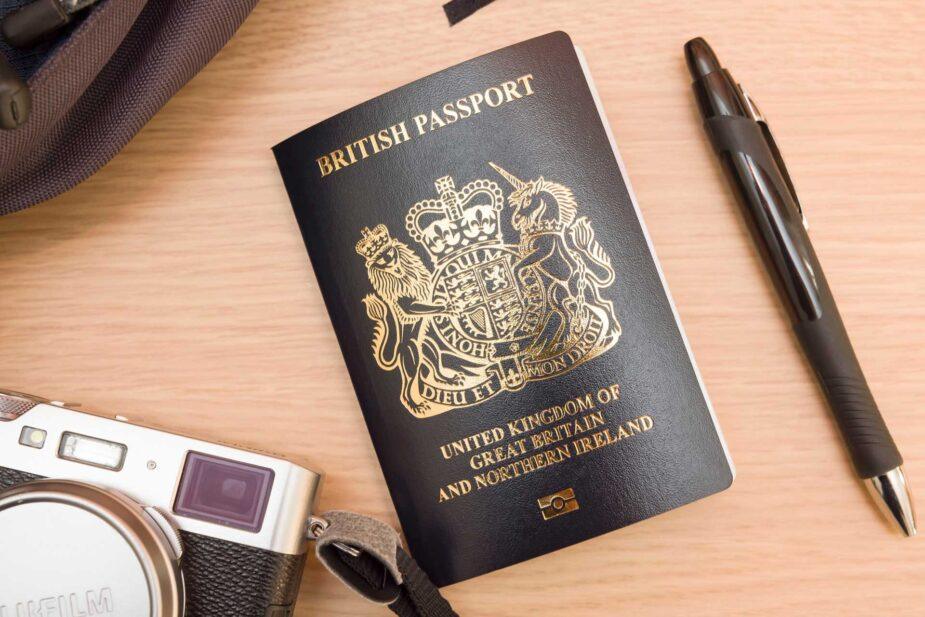
Thousands of foreign nationals choose the United Kingdom as a country where they can obtain a quality education, build a successful career and lay a secure foundation for the future. The United Kingdom maintains a leading position in the financial services market and ranks among the world's ten best countries to live in.
In 2026, British citizens enjoy visa-free travel to more than 160 countries, access to an advanced healthcare system, the most prestigious universities, effective social security and a developed, digitalised business environment. A private company can usually be registered online here within 24 hours. Each currently available route to citizenship has its own features and additional conditions, which we will explain in more detail below, along with faster options for securing legal status in Europe.
The Realities of 2026: Laws and Trends
The conditions and procedure for obtaining a British passport are governed by the Nationality Act. Foreign nationals wishing to regularise their stay must choose an appropriate basis that will allow them to qualify for long-term residence and meet the requirements for permanent residence and integration.
In May 2025, the UK government published the policy paper Restoring control over the immigration system, setting out its intention to reduce net migration, tighten the rules on work and study immigration, and strengthen border controls. However, the paper itself did not automatically change the rules: as of April 2026, some measures have already been introduced through changes to the Immigration Rules and immigration fees, while others remain subject to further implementation.
Changes that have already taken effect include raising the skill threshold for the Skilled Worker and Health and Care Worker categories to RQF level 6 from 22 July 2025. This reduced the number of eligible occupations by approximately 180. The Immigration Skills Charge for sponsors increased by 32%; from 8 January 2026, the language requirement for new applicants under the Skilled Worker, High Potential Individual and Scale-up routes was raised from B1 to B2; and from 8 April 2026, many visa and immigration fees were increased.
The main disadvantage of the new policy for immigrants is the possible increase in the residence period required for permanent resident status (ILR, Indefinite Leave to Remain) from 5 to 10 years. Prospective residents will also have to make greater efforts to learn English, particularly if they are applying for a visa through family reunification. The authorities plan to substantially reduce the number of immigrants as early as 2029, so the chances of securing legal status in the United Kingdom are decreasing significantly.
Expanded Opportunities: What a British Passport Offers
British citizenship gives its holders access to exclusive opportunities in education, entrepreneurship, investment and international cooperation. British nationals can travel visa-free almost anywhere in the world and benefit from simplified procedures for obtaining permission to enter the United States, Canada or Australia. Other advantages and opportunities offered by a British passport include:
- unrestricted residence and employment in the United Kingdom, as well as in the overseas territories, including Bermuda, the Virgin Islands, the Cayman Islands, Gibraltar and others;
- enhanced consular protection, including worldwide support during natural disasters and emergency evacuation while abroad;
- free healthcare through the NHS (National Health Service) and other social benefits, such as unemployment benefits, support for families with children and loans for pensioners;
- eligibility for educational and research grants, priority access to funding from Chevening, The Marshall Scholarship, UK Research and Innovation (UKRI) and other government funds;
- access to restricted investment, educational and other programmes in Commonwealth countries, a group comprising 56 independent states;
- the right to vote in local and parliamentary elections and to hold public office.
Learn more about the chances for fast, easy and guaranteed obtainment of second citizenship
Submit an application form and we'll get back to you!
Ways to Become a British Citizen
The United Kingdom offers several routes to acquiring citizenship, each suitable for particular categories of applicants and subject to its own requirements.
Naturalisation
The most common way to secure legal status in the United Kingdom is naturalisation, which requires permanent resident status and 5 years of lawful residence in the country, subject to certain exceptions. The main grounds that can lead to permanent residence and citizenship in the future include:
- Study.
Foreign applicants can obtain a Student visa if they are accepted onto a course with a licensed student sponsor, have sufficient funds and provide evidence of their English-language ability. Applicants under 18 need written consent from their parents or legal representatives. The permitted length of stay depends on the visa category and level of study: a Student visa usually allows up to 5 years on a degree-level course, while a Child Student visa for children under 16 allows 6 years. After completing their studies, graduates can apply for a Graduate visa, which allows them to remain in the country for 2 years, or 3 years after a doctoral programme. They can then switch to another immigration residence permit. Permanent residence is available after 10 years of lawful continuous residence, followed by citizenship through naturalisation. - Work.
Various types of work residence permits are available in Britain, depending on your qualifications, education, origin and other factors. The main requirement for a residence visa is an employment contract with a company approved by the Home Office, guaranteeing pay of at least EUR 48,155 per year or the going rate for the specific occupation, whichever is higher. A lower salary is permitted if the occupation is on the Immigration Salary List, the applicant is a new entrant, holds a relevant PhD or is covered by transitional rules. In such cases, pay may be 70–90% of the standard going rate. The permit is valid for up to 5 years, after which it is possible to obtain a permanent residence permit and naturalise. - Founding a Start-up.
Founders of innovative businesses in the United Kingdom can qualify for an Innovator Founder visa if they obtain approval from an accredited organisation (endorsing body). The applicant must also have at least EUR 1,460 in their bank account for the 28 days immediately before applying. The visa is issued for a maximum of 3 years but requires annual evidence of progress in developing the company. Business founders can apply for permanent residence as soon as this period ends and, once it is approved, apply for citizenship. - Highly Skilled Employment.
The Skilled Worker visa allows highly skilled employees to move to the United Kingdom to live and work if their salary is at least EUR 48,040 per year or meets the going rate for the specific occupation, whichever is higher. An offer from an accredited British employer approved by the Home Office, who will sponsor the applicant's relocation and stay in the country, must be provided, along with a Certificate of Sponsorship. It should be noted that this permit is issued only for certain jobs, for example in teaching or medicine. The visa is issued for the duration of the employment contract. After 5 years of residence in the country, permanent residence can be obtained, followed by citizenship.
The EU Settlement Scheme
Until 30 June 2021, most citizens of the EU, Switzerland, Norway, Iceland and Liechtenstein, as well as some of their family members, could apply under the EU Settlement Scheme for pre-settled or settled status in the United Kingdom. Although the main application deadline has passed, the scheme still allows certain late applications where there are reasonable grounds, as well as applications from some eligible family members. Settled status is normally granted after 5 years of continuous residence in the country, and British citizenship can generally be applied for 12 months after obtaining settled status or ILR. Spouses of British citizens do not have to observe this waiting period.
The Windrush Scheme
The Windrush Scheme is a special UK scheme created to help people who have the right to live in the country but have suffered because they lacked documents confirming their status. It is open to certain Commonwealth citizens who arrived in the United Kingdom before 1973, their children if additional conditions are met, and certain individuals of any nationality who arrived before 31 December 1988 and already have settled status. Depending on the circumstances, an applicant can obtain confirmation of their immigration status free of charge and, in some cases, apply for British citizenship without paying a fee. Eligible citizenship applicants do not need to take the Life in the UK test or prove their knowledge of English.
British Citizenship for Children and Family Considerations
Children's citizenship mainly depends on their parents' status in the United Kingdom. A child automatically acquires British citizenship if their mother or father is British or holds permission for permanent residence at the time of the child's birth. Citizenship is also granted to children born in the United Kingdom before 1 January 1983 or who are stateless. Eligibility for automatic acquisition of citizenship is checked at local advice centres in England and Wales.
The United Kingdom has a family reunification programme under which a Family visa can be obtained to join a spouse or partner, a fiancé or fiancée, a child, a parent or, in certain cases, a relative providing long-term care to the applicant. The partner/spouse route normally requires evidence of the relationship, English-language ability and an income of at least EUR 33,495. An immigration health surcharge is usually paid instead of taking out separate health insurance. On an initial application from abroad, this visa is usually issued for 2 years and 9 months, and on extension for 2 years and 6 months. Under a number of family categories, it is possible to apply for ILR after 5 years of residence, while spouses of British citizens may apply for citizenship after 3 years of residence in the country if they already hold indefinite immigration status on the application date.
Step-by-Step Process: The Path to British Citizenship
Becoming a British citizen involves a multi-stage process requiring strict compliance with the conditions laid down by law. Below, we examine the main stages of ordinary naturalisation followed by most foreign nationals.
- Obtaining a residence visa (residence permit).
The visa application is submitted online through the UK Visas and Immigration (UKVI) portal. You should apply 3–6 months before your planned trip and pay a fee, the amount of which depends on the type of permit. Within 240 days of submitting the application, you must provide biometrics (a photograph, fingerprints and a signature) and original documents at an accredited visa application centre. In some cases, identity verification takes place online through the UK Immigration: ID Check app. The permit takes the form of a sticker in the passport or is issued as an electronic visa (an electronic record in the UKVI account). As of 2026, most applicants receive an eVisa, and the validity period depends on the chosen immigration route and can range from several months to 5 years. - Applying for permanent residence.
Indefinite Leave to Remain in the United Kingdom (ILR) is available in many cases after 3–5 years of lawful residence, and after 10 years under some routes. Many applicants aged 18–64 are required to pass the Life in the UK Test and meet the English-language requirements, and applications are usually submitted online no earlier than 28 days before becoming eligible for settlement. The ILR fee is approximately EUR 3,726. A decision is usually made within 6 months, and the status itself may be lost after 2 years of continuous absence from the United Kingdom. - Obtaining citizenship.
Permanent residents can apply for citizenship personally or with the help of an accredited representative (a solicitor or immigration adviser). The applicant must also provide biometric data and pay a fee of EUR 2,124. The application is usually processed within 6 months, and it is not possible to check the status of the case online. If approved, you will receive an invitation to a formal ceremony, which must be attended within 3 months of notification of the decision. Taking the oath is the final stage in acquiring British citizenship. - Obtaining a UK internal passport.
A passport can be requested on the basis of the citizenship certificate by applying remotely or using a paper form sent by post. In addition to providing the documents, you must nominate a contact who will confirm your identity online and pay a fee starting at EUR 118. In some cases, the applicant will need to attend a short video interview. The completed passport will be sent by post within 3 weeks. Delivery takes longer if the application is made from another country.
Securing lawful residence in the United Kingdom is a lengthy and very expensive process, and immigration legislation becomes stricter every year. To obtain a second citizenship much faster, it is worth considering other, more accessible options. One alternative is an EU passport, which offers no fewer advantages than a British one.
Consult a lawyer to learn more about simplified programmes for securing legal status in Europe and obtain an effective immigration strategy.

Individual selection of immigration program
Get more information about the peculiarities of immigration to the EU at a free consultation

Requirements for Obtaining British Citizenship
To obtain British citizenship, you must ensure that you meet all the legal requirements; otherwise, your application may be refused. Applicants must not have spent more than 450 days outside the country in the preceding 5 years or more than 90 days in the final year before applying. A 3-year period applies to spouses of British citizens, during which no more than 270 days of absence and no more than 90 days in the final year are normally permitted. The standard requirements that passport applicants must meet include:
- being an adult;
- holding valid permission to settle in the country indefinitely (permanent residence);
- good character (no criminal convictions or breaches of visa conditions);
- meeting the residence requirement (living in the United Kingdom for 2, 3, 5 or 10 years, depending on the immigration route);
- intending to continue living in the United Kingdom;
- providing evidence of knowledge of English, Scottish Gaelic or Welsh;
- successfully passing a test on the United Kingdom's social system.
British citizenship applications are submitted online, and in most cases you must be physically present in Britain, the Isle of Man or the Channel Islands. It is important to have the entire application file to hand, as delays when completing the form cause the system to log you out.
Which Documents Are Required to Obtain Citizenship
Preparing a complete and accurate application file is an important stage on the path to a British passport. The documents that will be required include:
- a certificate confirming that you have passed the Life in the UK test;
- evidence of English-language proficiency at a minimum of B1 level (not applicable to residents over 65 and in certain other cases);
- a permanent residence card;
- a fee payment receipt;
- evidence of financial means (an employment contract and bank account statements).
The application must also name two people (referees) over 25 who can confirm your identity and good character; relatives cannot act in this capacity. Depending on the route to citizenship, additional documents may be required, including:
- children's birth certificates if they are included in the application;
- a certificate confirming university enrolment;
- a civil partnership or marriage certificate, among others.
If the authorities require other information to reach a decision during the examination of your case, you will receive an email notification and will be able to add it to your account on the official Gov.uk website. Documents not issued in English must be translated in advance and legalised or apostilled, depending on your current citizenship. To obtain a British passport, you will need your naturalisation certificate and birth certificate, the identity document you used to enter the United Kingdom and a recent photograph.
How Much It Costs to Obtain British Citizenship
The total cost of obtaining British citizenship depends on the route chosen to establish lawful permanent residence in the country and includes government fees, the cost of preparing the application file and related expenses. It is not possible to buy a passport: any attempt to do so and to use forged documents entails administrative and criminal liability. The country previously operated the Tier 1 Investor Visa programme, which offered a faster path to permanent residence, but this visa was abolished in 2022 and applications are no longer accepted.
When planning to move to the United Kingdom, you should also take living costs into account. Average monthly expenses for one person are EUR 954, and a one-room flat can be rented for EUR 951. Below, we examine the main administrative fees applicable in 2026.
| Expense item | Minimum cost, EUR |
| Residence visa | 374 |
| Healthcare (per year) | 896 |
| Permanent residence | 3726 |
| Citizenship | 2124 |
| Life in the UK test | 58 |
| English-language certificate | 185 |
| Passport | 118 |
You must also allow for the costs of translating documents, notarial services (approximately EUR 29 per certification) and consular appointments. In some cases, you can pay extra for priority processing within 2–30 days by paying EUR 578 or EUR 1,155 in addition to the main fee.
Dual Citizenship in the United Kingdom: Key Features
The United Kingdom has officially recognised multiple nationality since the British Nationality Act of 1948 came into force. You can therefore obtain a British passport without giving up your current citizenship. It is important to make sure that your own country also allows a second citizenship. In some jurisdictions, acquiring another country's passport results in the loss of citizenship in the home country, for example in China or India.
Retaining your previous citizenship when naturalising in the United Kingdom requires no additional effort, but it is important to familiarise yourself with the rules for crossing borders. For example, if you use your second passport while in your home country, you cannot benefit from consular protection or receive diplomatic assistance from the United Kingdom. When travelling abroad, you can present the identity document of the country that offers greater visa advantages.

Submit an application form and we'll get back to you!
Dispelling Myths and Misconceptions
There are many misconceptions about obtaining British citizenship that can complicate the path to the desired status or even lead to serious legal consequences. For example, many people believe that investing in the country's economy is enough to obtain a passport. In practice, entrepreneurs can obtain only a temporary permit, while citizenship is available if they meet the naturalisation requirements.
Another myth concerns marriage. A partnership with a British citizen does not give an automatic right to a passport: you will need to learn the language and live in the country for at least 3 years. According to accounts from people whose citizenship applications were refused, negative outcomes were most often linked to errors in the documents and incomplete application files. For example, one applicant did not submit a notarised marriage certificate on time and was unable to obtain citizenship on her first attempt. The situation was resolved only after a new application and additional expenses.
To avoid refusals, it is important to ensure compliance with all legal requirements, renew permits on time and comply with visa conditions. The most effective way to achieve the desired result is to consult specialists in international law. Experienced immigration lawyers will provide a step-by-step plan, help prepare a flawless set of documents and submit the application correctly on the first attempt, saving you money and months of waiting.
Accelerated Routes: Is It Possible to Obtain Citizenship Faster?
The path to a passport of the United Kingdom, which has left the European Union, becomes more complicated every year, while the number of programmes for foreign nationals is decreasing. The government is already considering ways to reduce immigration flows and increase the residence period for naturalisation to 10 years for almost all categories. Stricter rules will also be adopted on English-language proficiency. Because of bureaucratic difficulties, many immigrants are considering more accessible programmes in other countries. For example, Bulgaria, Slovenia and Romania offer EU citizenship through a simplified procedure.
Accelerated immigration programmes do not require lengthy residence in the country or obtaining and renewing residence permits, and the list of requirements for applicants is minimal. To secure a stable status quickly, it is worth acting promptly while conditions remain favourable. Professional assistance offers the opportunity to develop a sound strategy for the whole family and avoid delays and unnecessary expenses. Specialists can identify the most suitable basis for securing legal status and prepare the application file. Start your path to an EU passport now with a free legal consultation.
About the author

Diane Weber is an international law specialist with 10 years of legal practice experience. Her portfolio includes successful stories of citizenship in different European Union countries under simplified procedures. Diana provides detailed advice and helps many people to achieve their immigration goals in a short period of time, including resolving visa issues, assisting in obtaining residence permits and citizenship in the EU countries. In her blog, Diana Weber enjoys providing readers with detailed information about the features of most popular programs for obtaining a second passport.
No comments