Permanent residence in Slovakia (PR) is a long-term immigration status that allows a foreign national to live in the country, leave its territory, and return without restrictions. Permanent residence is considered a more stable form of legal stay than a temporary residence permit and may be granted for five years, for an unlimited period, or in the form of EU long-term resident status.
For those planning to relocate to Slovakia permanently, this status opens the door to a wide range of opportunities for building a full life in the country, including legal employment, business activities, education, and access to public healthcare and social insurance systems. Permanent residence is regarded as an important step in long-term immigration for families, professionals, and entrepreneurs who intend to settle in Slovakia on a lasting basis.
Citizens of any EU member state can move to Slovakia and reside there permanently immediately upon arrival. Learn during a free consultation how you may qualify for an EU passport in as little as four months.
Why So Many People Move to Slovakia
Permanent residence in Slovakia offers the opportunity to relocate to a European country located in the heart of the continent, combining a stable legal environment, the use of the euro, and access to the wider European Union. Slovakia attracts immigrants with its relaxed pace of life, proximity to major European markets, and transparent conditions for long-term residence in a country that is fully integrated into both the EU and the Schengen Area.
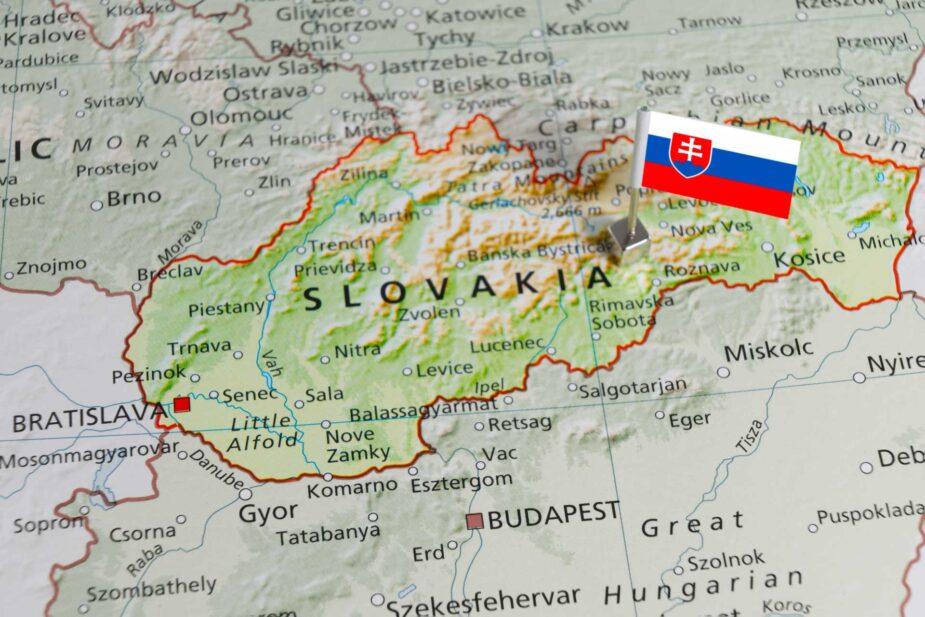
Among the main reasons to move to Slovakia are its developed infrastructure, favorable conditions for business immigration, social protections, and overall quality of life. The country offers promising employment opportunities and a comfortable everyday lifestyle. Slovakia enjoys a moderate climate with four distinct seasons and shares borders with Austria, the Czech Republic, Poland, Hungary, and Ukraine. This makes it a convenient location for living, traveling, and maintaining close ties with other European countries.
Among the disadvantages of living in Slovakia, immigrants often mention the language barrier, as a lack of Slovak language skills can make everyday life more challenging. Adapting to the local mentality and cultural traditions may also take time. According to reviews from foreign nationals who have moved to Slovakia, another common challenge is the relatively limited number of job opportunities available to immigrants who do not yet hold permanent resident status. For this reason, obtaining permanent residence can significantly improve employment prospects.
Main Ways to Immigrate to Slovakia
To relocate to Slovakia, you must have a legal basis that allows you to first obtain a visa, then a temporary residence permit, and eventually qualify for permanent residence after five years. The main immigration routes include:
- Employment.
To obtain a residence permit, you must have a work permit and an employment contract with a Slovak employer. A residence permit is generally issued for the duration of the employment contract, but the validity period cannot exceed five years. The government fee for this type of permit is EUR 250. - Business Activities.
This immigration route is available to entrepreneurs who already operate a business or plan to establish one in Slovakia. The residence permit is granted for up to three years and may be renewed. Applicants must provide documentary evidence of their business activities, such as a business plan, a certificate of business registration, or a professional license (for example, for legal or medical practice). The government fee ranges from EUR 330 to EUR 350, depending on whether the application is submitted at a Slovak consulate abroad or directly to a police department in Slovakia. - Education.
Residence permits are available to secondary school students, university students, and foreign nationals enrolled in preparatory programs for admission to Slovak universities. The residence permit is usually granted for the duration of studies, up to a maximum of six years. After graduation, university students may extend their residence permit for an additional nine months to search for employment or establish a business, or they may apply to change the purpose of stay.Applicants must provide proof of admission to an educational institution or enrollment in an approved educational program. - Family Reunification.
Family members of foreign nationals holding temporary or permanent residence permits in Slovakia may relocate to the country through family reunification. Refugees may also bring eligible family members. The permit may be granted for up to five years. Applicants must provide documents proving family relationships, such as a birth certificate, marriage certificate, or evidence that the family member is financially dependent on the resident sponsor. The residence permit fee is EUR 200. - Slovak Living Abroad Certificate.
Foreign nationals holding a Certificate of a Slovak Living Abroad may apply for a residence permit in Slovakia. This status is available to individuals who actively participate in Slovak communities abroad and to those who can demonstrate direct Slovak ancestry. Residence permits under this category are issued for five years. - Special Activities.
Professionals in the fields of culture, science, and sports, as well as volunteers, interns, and accredited journalists, may obtain a Slovak residence permit for the duration of their contract or activity, up to a maximum of five years. Applicants must provide a contract or agreement with the inviting organization or institution. The government fee for this category is EUR 140.
Applicants under the age of 18, students, and holders of a Slovak Living Abroad Certificate are exempt from paying the administrative fee for submitting a residence permit application. A fee of EUR 15 applies for obtaining the Slovak Living Abroad Certificate itself. In addition, applicants should consider the fee for issuing the residence permit card, which is EUR 10 if issued within 30 days or EUR 39 if expedited issuance within two days is requested.
Choosing the most suitable immigration route can significantly simplify and accelerate your relocation process. Our immigration law specialists can assess your situation, explain the available options, and help you identify the most efficient path to moving to Slovakia.

Individual selection of immigration program
Get more information about the peculiarities of immigration to the EU at a free consultation

Requirements for Obtaining Permanent Residence in Slovakia
You can move to Slovakia provided that you obtain a national visa on the grounds of being granted a residence permit. The application must be submitted to the country’s consulate at the place of residence, with payment of the administrative fee. After receiving the visa and arriving in Slovakia, a foreign national must contact the police department at the place of residence in the country and submit an application for a residence permit. Depending on the grounds, its validity period may range from 2 to 6 years; if necessary, the card may be renewed for a period of 3 to 5 years. Applicants from countries that have a visa-free regime with Slovakia may apply for a residence permit without obtaining an entry permit.
To move to Slovakia for permanent residence, it is necessary to stay continuously in the country for 5 years on the basis of a residence permit. When submitting an application at the police department, financial security will also be checked. When completing the application, it is necessary to provide proof of the grounds for further stay in the country and medical insurance, as well as a certificate of no criminal record.
Conditions for Obtaining Permanent Residence
Applicants planning to move to Slovakia for permanent residence must:
- reside continuously and legally in the country for 5 years at the time of submitting the application;
- confirm the availability of a stable and regular source of income sufficient for living in the country and supporting family members (if applicable);
- provide a health insurance policy;
- document the availability of housing (in individual cases).
There are also separate conditions for applicants for permanent residence in Slovakia valid for 5 years, for an unlimited period, or long-term. When obtaining a five-year permit, applicants must meet at least one of the following conditions, that is, be:
- a minor child financially dependent on a foreign national who is the spouse of a citizen of the republic and has permanent residence status;
- the spouse of a Slovak citizen permanently residing in the country, or his/her direct-line relative and financially dependent on him/her;
- a minor child holding a 5-year residence permit card or dependent on a foreign national with a temporary residence permit valid for 5 years;
- an applicant whose granting of permanent residence is in the interest of the Slovak Republic;
- an adult child dependent on a foreign national with permanent residence due to health reasons.
Without meeting the above conditions, the Ministry of the Interior has the right to grant a foreign national permanent residence in Slovakia if:
- the applicant is a stateless person;
- the applicant, as a child, had a residence permit or subsidiary protection without adult accompaniment for at least three years, during which he/she studied at a Slovak school;
- the applicant needs protection as a witness under special provisions of the law;
- the foreign national acts in the interests of Slovakia’s security (the request for permanent residence is made by the Slovak Information Service or Military Intelligence);
- in exceptional cases requiring special attention.
A permanent residence card for an unlimited period is granted to applicants who have held permanent residence valid for 5 years for at least the last 4 years or are minor children of a foreign national with permanent residence for an unlimited period.
Submit an application form and we'll get back to you!
Documents Required for Relocation
Since moving to Slovakia involves obtaining residence permits in stages, you will need to submit a document package to the competent authorities each time you apply. The required dossier consists of the following documents:
- passport;
- applicant’s photographs in the 3 × 3.5 cm format;
- bank statements or proof of income;
- confirmation of accommodation in the Slovak Republic (rented or owned);
- evidence of valid grounds or purposes for long-term residence in the country;
- certificate of no criminal record.
All certificates and other documents issued by a foreign state must be translated into Slovak by a certified translator. They must also be legalized. It is important to remember that bank statements and various certificates submitted with each application must not be older than three months.
Financial Aspects of Immigration
When applying for a permanent residence card, significant attention is paid to the applicant’s financial means, as relocating to Slovakia can be relatively expensive. Since 1 July 2025, applicants have been required to demonstrate financial resources of EUR 3,409.56 (calculated as twelve times the monthly subsistence minimum, which currently amounts to EUR 284.13). If the applicant has a dependent child, an additional amount equal to half of this sum must also be available in the account for the child. When planning a move for permanent residence, applicants should take into account the main expenses associated with the process:
| Expense Category | Cost, € |
| National visa | 90 |
| Residence permit application | 50–350 |
| Residence permit renewal | 25–200 |
| Permanent residence application | 250 |
| Residence permit / permanent residence card issuance | 10–39 |
To save both time and money, it may be worth considering obtaining citizenship in another EU country. Simplified citizenship programs are available in Romania, Bulgaria, and Slovenia, allowing eligible applicants to become full citizens of the European Union within a relatively short period of time and enjoy the right to live in any EU member state.
The Process of Obtaining Permanent Residence in Slovakia
The process of emigrating from your current country of residence to Slovakia and obtaining permanent residence is as follows:
- Obtaining a National Visa.
Citizens who do not have the right to enter Slovakia visa-free must begin the relocation process by obtaining an entry permit. To do this, they must apply at the Slovak consulate in their country of residence and submit an application for a national visa connected with the issuance of a residence permit. The applicant must provide a valid passport, a photograph in the 3 × 3.5 cm format, a health insurance policy, and documentary proof of the grounds for long-term residence in the country. The processing period does not exceed 30 days. Those who are entitled to visa-free entry may begin the procedure without first obtaining a national visa. - Arrival in the Republic.
After arriving in Slovakia, it is necessary to register your place of residence with the municipal administration and obtain a certificate confirming your residential address. When visiting the registration office, you must bring your passport and either a property ownership certificate or a rental agreement. If a rental agreement is presented, written consent from the property owner, confirmed by their signature, must also be provided. Registration is completed during the visit. - Applying for a Temporary Residence Permit.
To submit an application for a temporary residence permit, you must visit the Foreign Police Department with the required set of documents. Once the documents are accepted, the applicant receives confirmation that the residence permit card will be issued. It is also possible to submit a residence permit application through the Slovak consulate in your country of residence. When applying through a diplomatic mission, the foreign national undergoes a personal interview to assess their eligibility for a Slovak residence permit. Applications are generally processed within 30–90 days, depending on the applicant’s category. - Obtaining Long-Term Residence.
After five years of continuous and lawful residence in Slovakia under a temporary residence permit, a foreign national may apply to the Foreign Police Department for long-term residence valid for five years. The application is usually accompanied by a valid passport, two color photographs measuring 3 × 3.5 cm, documents confirming stable and regular income, health insurance, and, in certain cases, proof of accommodation. The application processing period is up to 90 days. - Applying for Permanent Residence.
Permanent residence for an unlimited period in Slovakia may be obtained after at least four years of residence based on a five-year long-term residence permit. The application must be submitted in person to the Foreign Police Department. Applicants are required to provide proof of the grounds for permanent residence, a certificate of no criminal record, health insurance, and evidence of financial self-sufficiency. The processing period for the application is 90 days.
Applicants are notified of decisions regarding both temporary and permanent residence permits by regular mail or electronically. After receiving a positive decision, the applicant must visit the police department to obtain the residence permit card.
Life in Slovakia After Obtaining Permanent Residence
To objectively assess the advantages and disadvantages of permanent residence in Slovakia, it is important to consider not only the scope of residents’ rights but also the challenges of integration, the requirements for maintaining the status, and the need to comply with the country’s immigration regulations. After receiving a permanent residence card, a foreign national becomes a resident of Slovakia. The advantages of relocating include the fact that this status grants broad opportunities and almost the full range of rights enjoyed by citizens of the republic, including:
- free education at public universities in the Slovak language;
- the right to establish and operate a business, including alongside official employment as a salaried worker;
- participation in local government elections as both a voter and a candidate;
- full access to the public services system;
- employment in Slovakia without the need to obtain a work permit;
- the possibility of applying for Slovak citizenship (provided that the total period of continuous residence in the country reaches 8 years).
The only significant limitation for foreign nationals with Slovak permanent residence is that they cannot vote in national elections and are not entitled to establish political parties or organizations, or participate in their activities.
Best Cities to Move to in Slovakia
When planning immigration to Slovakia, it is important to choose a location that best suits your lifestyle and expectations. Below are five of the most popular Slovak cities among immigrants:
- Bratislava.
The capital and cultural center of Slovakia is an excellent destination for employment and business activities. The city offers a large number of educational and medical institutions and has a highly developed transport infrastructure. The average salary in Bratislava in 2026 is approximately EUR 1,502 per month, while a single person typically spends around EUR 832 per month, excluding rent. - Prešov.
A historic city with significant cultural diversity and well-established Polish and Ukrainian communities. Prešov is relatively small and quiet, making it particularly suitable for families with children and older residents. The average monthly salary in the city is approximately EUR 1,146. - Košice.
The second-largest city in Slovakia, offering comfortable living conditions and excellent opportunities for business development. Košice has numerous educational institutions, including business schools and gymnasiums, as well as a wide range of healthcare facilities. The average salary is around EUR 1,305 per month, while the estimated monthly living costs for one person are about EUR 793, excluding rent. - Žilina.
This city provides numerous opportunities for entrepreneurs and startup founders thanks to its growing business sector, technology parks, and business incubators. The average monthly salary in Žilina is approximately EUR 1,231. - Trnava.
One of Slovakia’s fastest-growing cities, known for its many historical landmarks and old cathedrals. Due to its universities and academic environment, Trnava attracts a large number of international students, contributing to the growth of foreign communities. The average salary in the city is close to the national average and amounts to approximately EUR 1,202 per month.
Learn more about the chances for fast, easy and guaranteed obtainment of second citizenship
Submit an application form and we'll get back to you!
Risks of Illegal Residence
The police authorities may refuse to grant or renew a permanent residence permit if the applicant:
- does not meet the conditions for obtaining residence status;
- has stayed outside Slovakia for more than 180 consecutive days without notifying the police in advance;
- entered into a sham marriage with a Slovak citizen for the purpose of obtaining residence status, or if the marriage ended within five years of being granted permanent residence;
- applied for material assistance.
If a foreign national resides in Slovakia without any valid residence authorization, they may be subject to deportation or removal from the country and can also receive an entry ban for a specified period.
Why Professional Assistance Is Important for Immigration
Nearly every review from immigrants who have decided to relocate to Slovakia highlights that immigration is a complex process involving numerous legal and administrative nuances. For this reason, it is important to seek support from international immigration specialists who can assist with the relocation process and ensure that all documents for temporary and permanent residence applications are prepared correctly.
Another advantage of working with immigration lawyers is the opportunity to explore alternative ways of moving to Slovakia without having to go through multiple residence permit stages. By booking a free consultation with our specialists, you can receive personalized guidance on choosing the most suitable immigration program, allowing you to relocate to Slovakia or another European Union country in as little as 14 months.
About the author

Diane Weber is an international law specialist with 10 years of legal practice experience. Her portfolio includes successful stories of citizenship in different European Union countries under simplified procedures. Diana provides detailed advice and helps many people to achieve their immigration goals in a short period of time, including resolving visa issues, assisting in obtaining residence permits and citizenship in the EU countries. In her blog, Diana Weber enjoys providing readers with detailed information about the features of most popular programs for obtaining a second passport.
No comments