Slovak citizenship provides full access to developed infrastructure and modern living conditions in the heart of Europe. As a member of the European Union, the country offers its citizens visa-free travel, broad business opportunities, high-quality healthcare, affordable education, various social benefits, and comfortable living conditions.
Slovak citizenship gives you the opportunity to live in a country with one of the lowest levels of bureaucracy in the EU and a straightforward process of adaptation and integration for immigrants. The state is located in the very center of Europe, and Bratislava is the only capital city in the world that borders two other countries – Hungary and Austria. Slovakia is among the top 10 EU countries with the lowest crime rates, ensuring a high level of safety for its residents.
The Reality of 2026: Laws and Trends
In 2024, a number of amendments were introduced to the Foreigners Act aimed at improving control over mass immigration. Applicants for naturalization are required to demonstrate a stable income, pass a Slovak language proficiency test, and provide evidence of social and cultural integration into society. Measures to verify the authenticity of documents have also been strengthened, along with requirements relating to health and social insurance for long-term residence.
These changes have, to some extent, made the process of relocating to the country for permanent residence more complicated, as the requirements for applicants have become stricter. In 2026, Slovakia’s migration policy is focused on attracting highly qualified specialists and entrepreneurs in the field of innovation. These efforts are primarily driven by labor shortages and the state's desire to increase its competitiveness in the European market.
Expanded Opportunities: Benefits of a Slovak Passport
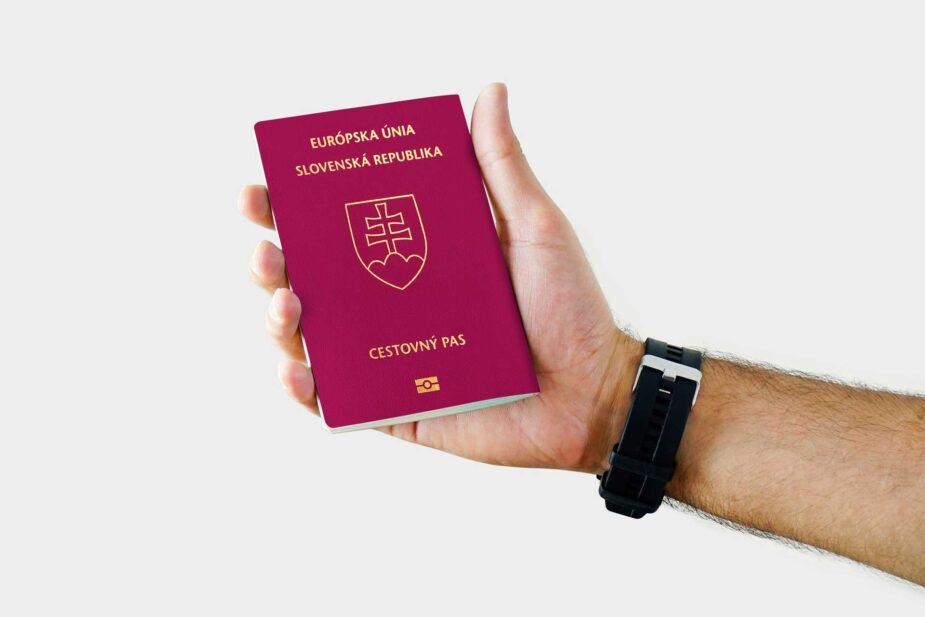
A Slovak passport is a document that provides visa-free access to more than 160 countries and offers broad opportunities for personal and professional development in Europe. Other advantages of obtaining Slovak citizenship and, consequently, an EU passport include:
- visa-free travel throughout the EU and the Schengen Area;
- access to unique grants and scholarships, including international student exchange programs and research projects;
- the right to receive tuition-free education at the country’s higher education institutions, as well as the opportunity to participate in specialized programs in technology, medicine, and engineering that attract a large number of students from around the world each year;
- access to modern healthcare services, including specialized medical treatment and prescription medications;
- eligibility for social benefits, including unemployment assistance, parental benefits, and pensions;
- access to housing incentives, including rental and home purchase subsidies, as well as favorable mortgage lending conditions;
- the opportunity to conduct business with support from European funds and grants aimed at the development of small and medium-sized enterprises;
- taxation with lower rates for certain sectors of activity, including investment-related activities, as well as a reduced 15% tax rate for tax periods in which a company’s income remains below the established threshold;
- the right to participate in public procurement procedures, providing businesses with access to major government contracts;
- access to services offered by European financial institutions and more favorable lending conditions compared to those available to foreign nationals;
- the ability to purchase various types of real estate in Slovakia and throughout the European Union without obtaining special permits;
- protection abroad through Slovak diplomatic missions and embassies around the world.
Ways to Become a Citizen of Slovakia
Slovak citizenship can be acquired through several pathways, each of which has specific requirements for applicants. Currently, the Slovak Citizenship Act provides six ways to obtain a passport of the country.
Naturalization
Foreign nationals have the right to apply for Slovak citizenship through naturalization, provided they have resided in the country for 8 years. The required period may be reduced to 5 years for spouses of Slovak citizens and for persons of Slovak origin. For long-term EU residents, the naturalization period is 6 years. Applicants must demonstrate knowledge of the Slovak language, integration into society, and financial self-sufficiency.
Slovak Living Abroad Certificate
This document may be obtained by persons of Slovak origin or foreign nationals who hold a certificate confirming their status as speakers of the Slovak language or their cultural ties to Slovakia, and who have made a special contribution to Slovak communities abroad and actively participate in the activities of such organizations. Special merits may relate to fields such as science, culture, sports, economics, or technology. Holders of the Slovak Living Abroad Certificate may apply for citizenship after 3 years of residence in the country.
Permanent Residence
Living in Slovakia on the basis of permanent residence for 10 years serves as grounds for obtaining citizenship. This option also applies to stateless persons who have resided in the country for 3 years.
Repatriation
A Slovak passport may be obtained by persons who have never been citizens of Slovakia but have Slovak ancestry. This opportunity is also available to close relatives up to and including the third generation whose ancestors held citizenship of Czechoslovakia or were born in the territory of present-day Slovakia. Repatriates are exempt from residence and language requirements.
Restoration
Applicants who were removed from the State Union of the Slovak Republic have the opportunity to restore their status. The same right applies to individuals who lost Slovak or Czechoslovak citizenship under the previous version of the Citizenship Act adopted in 1993.
Special Merit
Foreign nationals who have outstanding achievements in the fields of culture, economics, sports, or technical, scientific, and social activities that have benefited the Slovak Republic may be granted citizenship. This right also extends to applicants whose activities are considered to be in the interests of the country. The requirement to demonstrate proficiency in the Slovak language does not apply to this category of applicants.
Slovak Citizenship for Children and Family-Related Aspects
Children born in the territory of Slovakia acquire citizenship if their parents are stateless persons or if their citizenship cannot be inherited. The legal provision also applies to children where at least one parent is a citizen of Slovakia; in such cases, the place of birth is irrelevant. Citizenship is granted automatically upon the parents signing the Declaration of the Newborn’s First and Last Name, which serves as the basis for issuing a birth certificate.
Children who have continuously resided in the country for at least 3 years before reaching the age of 18 may obtain citizenship upon application. This opportunity also applies to minors whose legal representative or guardian is a Slovak citizen. For this category of applicants, the required residence period is 2 years, although this condition does not apply to children under the age of 2.
The acquisition of citizenship by spouses of Slovak citizens follows the naturalization procedure, but the mandatory residence period is reduced to 5 years. During this period, the applicant must remain married to and live together with their spouse. At the initial stage, the foreign national is granted a residence permit, which may later serve as the basis for obtaining citizenship.
Migration lawyers can help identify the most suitable basis for obtaining a stable legal status in Slovakia. They will analyze your situation and propose the optimal pathway for acquiring a passport in an EU country.
Learn more about the chances for fast, easy and guaranteed obtainment of second citizenship
Submit an application form and we'll get back to you!
Step-by-Step Process: How to Obtain Slovak Citizenship
It is possible to obtain a Slovak passport through naturalization by completing a procedure consisting of several stages. The process takes a considerable amount of time, and the exact timeframe depends on the legal basis under which the foreign national resides in the country. The most common and practical way to legalize long-term residence in Slovakia is through naturalization, which involves the following steps:
- Obtaining a National Visa.
Citizens of countries that do not have a visa-free regime with Slovakia must apply for a national visa at a consular office of the Slovak Republic in connection with the granting of a residence permit. Applicants must complete an application form and submit the required document package together with evidence supporting the purpose of their stay. The processing time for such applications is up to 3 months, and the fee ranges from EUR 15 to EUR 90. The visa is issued for a period of up to 90 days. - Obtaining a Residence Permit.
An application for a residence permit must be submitted by the foreign national to the police department responsible for their place of residence in Slovakia or, in certain individual cases, to a Slovak consular office abroad. Appointments are arranged through the diplomatic mission or the official website of the Ministry of the Interior.
Depending on the grounds for entry into the country, a temporary residence permit may be granted for a period ranging from 2 to 6 years. If the original purpose of residence remains valid, the residence permit card may be extended for an additional period of 3 to 5 years. The administrative fee for submitting an application depends on the purpose of residence: EUR 330 for business activities, EUR 250 for employment, EUR 200 for family reunification, and EUR 140 for special activities. The issuance of the residence permit card itself is subject to an additional fee of EUR 10–39. - Obtaining Permanent Residence Status.
A permanent residence card may be granted to foreign nationals in one of three forms: a 5-year permit, an unlimited-duration permit, or long-term residence status. Applications for permanent residence in Slovakia must be submitted to the police authority, where applicants are also required to demonstrate a valid basis for residence, provide a criminal record certificate, and present proof of health insurance.
Financial self-sufficiency is a mandatory requirement. For a 5-year permanent residence permit, applicants must demonstrate funds equal to 12 times the subsistence minimum, while minors must demonstrate half of that amount. As of 2026, this corresponds to EUR 3,409.56 for an adult and EUR 1,704.78 for a child. For long-term residence, applicants must prove a stable and regular income sufficient to support themselves and their family members, with the required amount determined individually. - Preparing the Document Package.
Depending on the legal basis for acquiring citizenship, applicants must prepare a personal file containing comprehensive evidence supporting their right to remain in the country. All certificates and documents issued by foreign authorities must be translated into Slovak by a certified translator and legalized by a notary. - Submitting the Citizenship Application.
Applications for Slovak citizenship must be submitted to the district authority located in the regional administrative center corresponding to the applicant’s place of residence or to a Slovak diplomatic mission. The document package must be accompanied by a completed application form issued by the Ministry of the Interior.
If the applicant is a child under the age of 18, the application form must be signed by both parents or by one parent, while the other parent must provide written consent. - Passing the Slovak Language Examination.
For most categories of applicants, proficiency in the Slovak language is a mandatory requirement for obtaining citizenship. During the citizenship application process, applicants undergo an assessment conducted by a commission composed of administrative officials appointed by the head of the district authority. During the interview, the applicant must answer questions about themselves and their family, as well as topics related to the history and socio-political development of Slovakia.
The second stage of the examination consists of reading aloud a newspaper article of at least 500 words, after which the applicant is required to write down everything they remember within 30 minutes. The commission prepares an official report on the language assessment and issues its conclusion.
Children under the age of 14, applicants over the age of 65, former citizens of Czechoslovakia, holders of a Slovak Living Abroad Certificate, and applicants who have already passed a Slovak language examination as part of admission to an educational institution in Slovakia are exempt from this requirement. - Obtaining Citizenship.
The Ministry of the Interior of Slovakia reviews the application and may request additional documents or invite the applicant for an interview. A decision on the application is delivered by letter within a period of up to 24 months through the district authority, after which the applicant must take an oath before a commission.
The applicant is then issued a certificate confirming the acquisition of citizenship. This document is used by the competent authorities to verify citizenship status and serves as the basis for obtaining a Slovak national identity card. After receiving the identity card, the applicant may apply for a Slovak passport, which is issued in booklet form. The passport provides visa-free access to more than 160 countries worldwide.
Requirements for Obtaining Slovak Citizenship
To become a citizen of Slovakia, applicants must comply with the requirements established by law and fulfill all applicable conditions:
- reside continuously in the territory of the Slovak Republic for at least 8 years at the time of submitting the citizenship application;
- possess knowledge of the state language and have basic knowledge of the history, geography, and civic and political development of Slovakia;
- be law-abiding and not pose a threat to public or national security;
- submit a complete set of documents when applying to the regional authority.
What Documents Are Required to Obtain Citizenship?
The basic application package, submitted together with the citizenship application, includes:
- application for the granting of citizenship;
- applicant questionnaire;
- autobiography;
- valid identity document;
- birth certificate;
- civil status certificate (if applicable);
- proof of lawful residence in Slovakia;
- criminal record certificate issued within the last 6 months from the applicant’s country of citizenship, as well as from countries where the applicant held authorized residence during the previous 15 years;
- documents relating to previous citizenship or Slovak Living Abroad status (if applicable);
- documents confirming knowledge of the Slovak language (in cases where they replace the standard language assessment).
In addition to the basic file, immigration authorities may request supplementary documents if they are unable to obtain the relevant information independently through information systems:
- confirmation from the employer regarding the payment of income tax and contributions to pension, health, and social insurance schemes;
- certificates confirming payment of fees issued by the municipal tax authority or customs office;
- a statement from a healthcare institution confirming contributions paid to the state health fund and the validity period of the insurance policy;
- proof of employment issued by the employer together with a copy of the employment contract;
- evidence of lawful income sufficient to support the applicant and, where applicable, family members living with them, or a bank statement in cases where the applicant is unemployed.

Submit an application form and we'll get back to you!
How Much Does It Cost to Obtain Slovak Citizenship?
Slovak citizenship cannot be purchased through the acquisition of a ready-made passport, as this constitutes a legal offense. At present, the country also does not offer investment programs that would allow applicants to obtain citizenship through investments in real estate or the national economy. Since naturalization is the most common way of obtaining a Slovak passport, the main government fees associated with the procedure are as follows:
| Expense Item | Cost, € |
| Visa | 15–90 |
| Registration of residence with issuance of confirmation | 5 + 4 |
| Residence permit application | 50–330 |
| Residence permit renewal | 25–200 |
| Permanent residence application | 250 |
| Issuance of residence permit/permanent residence card | 10–39 |
| Citizenship application | 30–1 000 |
| Issuance of citizenship certificate | 15 |
| Identity card application | 4,50 |
Dual Citizenship in Slovakia
In 2022, amendments were introduced to the legislation of the Slovak Republic allowing citizens to retain their Slovak citizenship when acquiring the citizenship of another country. The only condition is residence in the other country for at least 5 years and documentary proof of this fact. For foreign nationals obtaining a second citizenship in Slovakia, renunciation of their citizenship of origin is not a mandatory requirement.
Accordingly, a foreign national who acquires Slovak citizenship while retaining another nationality will be regarded as a Slovak citizen within the territory of Slovakia. When crossing the border, it is necessary to present the Slovak passport, as this document allows entry to and departure from the country on the rights of a citizen. If status is verified using the passport of another country, the traveler will be treated as a foreign national entering under a visa or visa-free regime, as applicable.
At the same time, under Slovak law, it is more accurate to refer to dual citizenship as a situation in which a person simultaneously holds Slovak citizenship and the citizenship of another state where a bilateral treaty exists between the two countries.
Debunking Myths and Common Mistakes
Obtaining Slovak citizenship is a serious process that is strictly regulated by law. Attempts to acquire citizenship illegally or mistakes made during the procedure can lead to serious consequences, including refusal, deportation, and even criminal prosecution. There are certain misconceptions and myths suggesting that a Slovak passport can be obtained within 2–3 months, which is far from reality. Among the unlawful methods are:
- submitting forged documents, such as birth certificates, or providing false information;
- attempting to bribe public officials or Immigration Service employees;
- entering into a sham marriage with a citizen for the purpose of obtaining status;
- residing in the republic without legal grounds, namely without a visa or residence permit.
The most common mistakes made by applicants seeking Slovak citizenship include:
- misinterpreting the legislation;
- submitting an incomplete application file or improperly prepared documents;
- insufficient knowledge of the Slovak language;
- lack of valid grounds for residence in the country;
- completing application forms with errors.
It is quite common to find reviews from immigrants who have obtained Slovak citizenship describing both the advantages and disadvantages of the status, as well as situations where applications were rejected due to incorrect document translations or improper legalization.
To avoid problems during the process of obtaining Slovak citizenship or citizenship of another EU country, many immigrants recommend seeking assistance from immigration lawyers and experienced translators. The path to obtaining a Slovak passport is a lengthy and responsible process, making it important to follow the procedure carefully with the support of qualified professionals.

Individual selection of immigration program
Get more information about the peculiarities of immigration to the EU at a free consultation

Accelerated Routes: Is It Possible to Obtain Citizenship Faster?
At present, Slovakia does not offer a fast-track citizenship procedure for the vast majority of applicants. There are ways to obtain citizenship within a shorter timeframe, but applicants are still required to reside in the country for several years. An alternative is obtaining EU citizenship within a period of up to 14 months, which would allow you to move to Slovakia and enjoy the full range of rights available to local residents.
Simplified immigration programs are currently available in Slovenia, Bulgaria, and Romania, but legislation in these countries changes rapidly. Therefore, it is important to consult international law specialists as soon as possible.
By completing the form on our website, you can receive a free consultation from the company’s experienced lawyers regarding available relocation programs, as well as the timelines and costs associated with obtaining European Union citizenship. The procedure will not require significant effort or time on your part, specialists will handle all stages, including the preparation of the document package, while your primary task will be planning your move to Slovakia.
About the author

Diane Weber is an international law specialist with 10 years of legal practice experience. Her portfolio includes successful stories of citizenship in different European Union countries under simplified procedures. Diana provides detailed advice and helps many people to achieve their immigration goals in a short period of time, including resolving visa issues, assisting in obtaining residence permits and citizenship in the EU countries. In her blog, Diana Weber enjoys providing readers with detailed information about the features of most popular programs for obtaining a second passport.
No comments