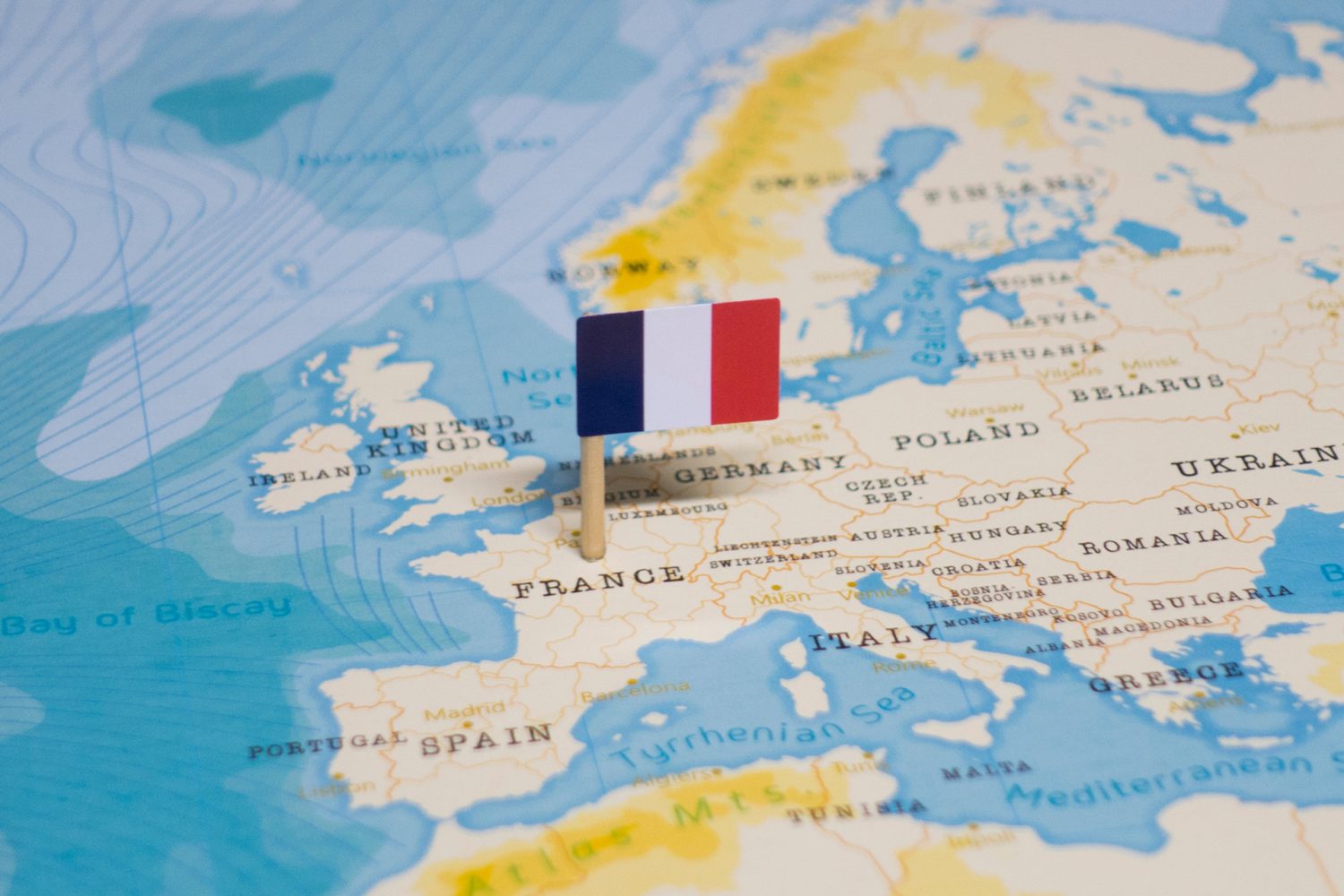
A Slovak residence permit allows foreign nationals to legally stay in the country for more than 90 days. Many foreigners choose to immigrate to Slovakia for several reasons, including the high level of safety and quality of life. According to UN data, Slovakia has a high Human Development Index (HDI) of 0.875 — higher than, for example, Poland (0.854) and Lithuania (0.866).
A residence permit grants the right to travel and re-enter the country without a visa. The permit is tied to the specific purpose stated during the application process. If the basis for residence changes, the applicant must submit a new application for another type of residence permit. Common grounds include employment, business activity, family reunification, education, and others.
More detailed information about how to obtain a residence permit in Slovakia and the advantages of this status is provided below in the article.
Advantages of Obtaining a Slovak Residence Permit
Despite its relatively small size, Slovakia is considered one of Europe’s attractive tourism destinations. The country also benefits from favourable environmental conditions, as approximately 40% of its territory is covered by forests.
There are also several important reasons why relocating to Slovakia and obtaining a residence permit may be advantageous compared to staying in the country as a tourist, including:
- visa-free travel throughout the 29 Schengen Area countries;
- the right to work in Slovakia with a valid work permit;
- access to prestigious education at Slovak universities and internationally recognised diplomas;
- free access to healthcare services and European health insurance systems;
- eligibility for assistance and support from social services and participation in family support programmes, including annual social support payments of approximately EUR 200 per child;
- the possibility of obtaining permanent residence in Slovakia after 5 years and citizenship after 8 years of continuous legal residence, including both temporary and permanent residence periods.
An even broader range of rights and opportunities in Slovakia and throughout the EU becomes available with citizenship of an EU country. Learn about the best ways to obtain an EU passport within as little as 12 months during a free consultation.

Individual selection of immigration program
Get more information about the peculiarities of immigration to the EU at a free consultation

Who Can Obtain a Residence Permit in Slovakia and Under What Conditions
A residence permit in the Slovak Republic is available to foreign nationals who have valid grounds for long-term stay in the country, can document those grounds, and meet the general requirements established by Slovakia’s Act on Foreigners. In 2024, several amendments to the legislation were introduced, mainly affecting the issuance of entry and residence permits. These measures were aimed at improving the regulation of mechanisms related to large-scale migration control.
To obtain a Slovak residence permit in 2026, applicants must generally meet the following requirements:
- legal entry into Slovakia, either with a visa or under a visa-free regime;
- documented grounds for long-term residence in the country;
- a criminal record certificate confirming the absence of convictions;
- proof of sufficient financial means to support themselves and their family during their stay in Slovakia (EUR 3,419.56);
- ownership or rental of accommodation in Slovakia;
- health insurance covering the entire planned period of stay;
- a medical certificate confirming the absence of diseases that could threaten public health.
Below are the main grounds on which foreign nationals may obtain different types of residence permits and relocate to Slovakia.
Business Activity
A Slovak residence permit may be issued for business purposes if the applicant already conducts or plans to conduct entrepreneurial activity in the country as a sole trader or acts as a company representative without being employed by that company.
The permit is issued for a period of up to 3 years with the possibility of renewal. As supporting evidence, entrepreneurs must provide one of the following:
- a business plan with a calculated budget for launching a company;
- confirmation of founder or executive director status in a company;
- a business plan for launching a startup or innovative business;
- registration certificate of sole proprietorship;
- licence for private legal or medical practice.
Education
A residence permit may be granted to secondary school students under the age of 20 and vocational education students under the age of 23. Residence permits are also available to university students and foreign nationals participating in language or professional preparation programmes for studies at Slovak universities.
The permit is issued for the duration of studies but cannot exceed 6 years. After graduation, university students may obtain an additional 9-month extension to search for employment or start a business. A student residence permit also allows its holder to engage in entrepreneurial activities while living in Slovakia.
To obtain this status, applicants must provide one of the following documents:
- confirmation of admission issued by the Ministry of Education, Science, Research and Sport of the Slovak Republic;
- official confirmation of admission from an educational institution;
- documentary proof from an organisation implementing programmes approved by the Slovak government or the EU under agreements with relevant state authorities.
Employment
Residence permits are available to foreign nationals on the basis of a work permit issued by the Labour Office responsible for the place of employment. The validity period corresponds to the expected duration of employment and may not exceed 5 years, although it can be renewed.
Residence permits issued for seasonal work are not renewable and are granted only if the applicant has an employment contract for a period not exceeding 6 months within 12 consecutive months. If seasonal employment exceeds 180 days within a 12-month period, applicants must instead obtain a standard temporary residence permit for employment purposes.
Permits for employees transferred within a company are issued for a maximum period of 3 years if the applicant is a senior employee or specialist. For trainees, the maximum validity period is 1 year. These categories of residence permits cannot be extended.
Research and Development Activities
A residence permit may be granted to employees engaged in research and development activities provided they have a hosting agreement for the duration of the contract, but for no longer than 2 years. This type of permit also includes the right to engage in business activities. Applicants must provide a valid hosting agreement as supporting evidence.
Family Reunification
A temporary residence permit for family reunification may be granted to family members — including children under 18, spouses, and financially dependent parents — of foreign nationals who hold temporary or permanent residence in the Slovak Republic. This category also applies to relatives and spouses of asylum applicants.
The residence permit is issued for up to 5 years and may include permission to conduct business activities. Applicants must provide supporting documents such as marriage certificates, children’s birth certificates, or proof of financial dependency of parents.
Status of a Slovak Living Abroad
A residence permit may be issued for 5 years to foreign nationals who hold the status of a Slovak living abroad. This permit also includes the right to conduct business activities. To confirm eligibility, applicants must provide a valid Certificate of a Slovak Living Abroad.
EU Long-Term Residents
Holders of EU long-term resident status may obtain a Slovak residence permit if they plan to work, study, or conduct business activities in Slovakia. Residence permits may also be issued for family reunification with relatives or spouses who previously resided in another EU member state.
The residence permit is granted for the period necessary to carry out the intended activities, but for no longer than 5 years. To confirm eligibility and obtain the permit, applicants must provide an EU long-term resident card together with one of the following documents:
- an employment contract or written confirmation from an employer expressing the intention to hire the foreign national;
- confirmation of admission to studies or professional training from an accredited institution;
- proof of business, special, scientific, or research activity;
- evidence of family relationships.
Special Activities
According to Slovak law, residence permits for special activities may be granted to applicants entering Slovakia for lecturing, sports, artistic activities, volunteering, accredited journalism, or internships.
The permit is issued for the duration of the contract or activity but may not exceed 5 years.
The Process of Obtaining a Residence Permit in Slovakia
Depending on the immigration basis, applicants may need to complete additional procedures. For example, employment-based applicants usually require a work permit issued by the competent Slovak authority, while business applicants may need to register as entrepreneurs in Slovakia.
For most residence permit applicants, the procedure generally includes the following stages:
- Obtaining a National Visa for Entry into Slovakia.
Foreign nationals must apply for a national visa at a Slovak consulate in connection with their future residence permit application. Applicants usually need to provide a passport, photograph, proof of travel purpose, and health insurance policy. - Entering the Country.
After arrival in Slovakia, applicants must register their place of residence with the local municipal registration office. Applicants generally need to provide an identity document or passport together with written consent from the property owner confirming accommodation. Family members, including children, may also be registered. After the procedure, a residence registration certificate is issued. - Submitting the Residence Permit Application.
Applications for a Slovak residence permit may be submitted personally at a Slovak police department responsible for the applicant’s place of residence, at a Slovak consulate abroad, or online through the official website of the Ministry of the Interior.
If the application is submitted through a diplomatic mission, the applicant usually attends a personal interview to assess eligibility for the Slovak residence permit. When applying directly at the police department, the applicant may receive a decision on issuance or refusal on the day of submission. - Receiving the Temporary Residence Permit Card.
The police authorities notify applicants of a positive decision either electronically or in writing, indicating the date of issuance and validity period of the residence permit. The document must be collected at the police department.
The Slovak residence permit is issued in the form of a plastic identification card. Within 30 days after receiving the permit, applicants must submit a medical certificate from an accredited institution confirming the absence of diseases that could pose a threat to public health.
To qualify for permanent residence, applicants must generally reside in Slovakia for 5 years, which may require renewing the residence permit depending on its validity period. The permit card also serves as an identity document through which authorities may verify the foreign national’s legal status.
Those wishing to become full residents of Slovakia may also consider simplified EU citizenship pathways that allow applicants to obtain EU citizenship without going through multiple visa, temporary residence, and renewal stages.
Documents Required for Obtaining a Residence Permit
To successfully obtain a residence permit in Slovakia, applicants must provide a complete personal file that complies with legal requirements. The mandatory list of documents includes:
- passport;
- completed official application form;
- colour passport-format photograph (3 × 3.5 cm);
- criminal record certificate (not required for children under 14 years old);
- documents confirming the purpose of stay;
- bank statement or proof of income confirming sufficient financial means for living in Slovakia (approximately EUR 3,410 per year);
- proof of accommodation, such as a property ownership certificate or rental agreement;
- receipt confirming payment of the administrative fee.
Documents issued abroad must be apostilled or superlegalised and accompanied by an official translation into Slovak. Additional rules also apply when preparing the application file — certificates and statements generally must not be older than 90 days, although this requirement does not apply to birth or marriage certificates.
Processing Times and Costs
Depending on whether additional permits are required as supporting evidence for relocation to Slovakia, both the processing time and overall cost of obtaining a residence permit may vary. For most categories of applicants, the approximate costs and processing periods are as follows:
| Expense Category | Cost (€) | Processing Time |
| National visa | 60–90 | 30 days |
| Residence registration | 0–4 | Individual |
| Residence permit application | 50–350 | 30–90 days |
| Issuance of residence permit card | 10 / 39 | 30 days / 2 days |
Although the government fees for obtaining a residence permit are relatively low, the total relocation costs may still be significant. Applicants usually need to pay for document translation and legalisation, with the price for processing a single document reaching EUR 102 or more. These services generally require at least 1–5 days to complete.
In 2026, there are also alternative legal pathways for relocating to Slovakia that do not require long-term residence obligations or regular renewal of permits.
Citizens of any EU country have the right to move to Slovakia for an unlimited period without obtaining additional permits. In most cases, it is sufficient only to register a local residential address. Information about obtaining EU citizenship may be discussed during a consultation with an immigration specialist.
Submit an application form and we'll get back to you!
Extension of Residence Status and Obtaining Permanent Residence in Slovakia
Temporary residence status in Slovakia may be extended if the original reason for stay remains valid at the time the first permit expires. A renewed residence permit card is usually issued for a period of 3–5 years, while the government fee ranges from EUR 50 to EUR 350 depending on the immigration basis. Applicants must also pay an additional EUR 6 for the passport stamp and approximately EUR 4 for courier delivery.
After 5 years of legal residence, applicants may qualify for long-term permanent residence, which allows them to remain in Slovakia for an extended period and grants almost all the rights and obligations of Slovak citizens. There are two types of permanent residence permits: a 5-year permanent residence permit and permanent residence for an unlimited period (usually available after 4 years of residence with the 5-year permanent permit).
Applications for permanent residence must be submitted to the police department. To obtain the status, applicants must confirm valid grounds for long-term stay, proof of accommodation, absence of criminal convictions, financial stability, and valid health insurance coverage. Adult applicants are generally required to prove monthly income of at least EUR 284.13, while the requirement for minors is approximately EUR 142. The administrative fee is EUR 250. Spouses of Slovak citizens and applicants under 18 years of age are exempt from this fee.
Slovak citizenship may generally be obtained after at least 8 years of continuous residence in the country. Authorities place significant importance on lawful behaviour, knowledge of the Slovak language, and understanding of Slovak history and the country’s socio-political system. Citizenship applications are usually processed within approximately 24 months from submission. Administrative fees range from EUR 30 to EUR 1,000 depending on the category of application.
Reasons for Refusal or Revocation of a Residence Permit
Applications for Slovak residence permits may be rejected by the police authorities if the applicant does not meet the legal requirements or the conditions for obtaining residence status. Common reasons for refusal include:
- the applicant is considered an undesirable person in Slovakia;
- authorities reasonably suspect that the applicant may threaten public order, public health, or national security during their stay;
- the applicant entered into a fictitious marriage with a Slovak citizen;
- the applicant submitted false documents or holds a passport valid for less than 90 days.
A temporary residence permit may also be revoked by the police authorities in the following situations:
- the original basis for obtaining the permit is no longer valid;
- the applicant failed to provide additional required documents within the established deadlines (30 days plus an additional 15 days in special cases);
- the residence permit holder committed a criminal offence or violated the law;
- the actual purpose of stay in Slovakia differs from the declared purpose for which the permit was issued;
- the stated purpose of entry into Slovakia is not being fulfilled or cannot be fulfilled.
To reduce the risk of refusal, applicants should carefully prepare their residence permit applications. Immigration specialists may help avoid common mistakes and suggest alternative legal pathways for relocating to Slovakia.
In several EU countries, foreign nationals also have access to simplified procedures for obtaining EU citizenship more quickly and with fewer formalities, allowing them to freely choose any EU member state for living and employment.
Learn more about the chances for fast, easy and guaranteed obtainment of second citizenship
Submit an application form and we'll get back to you!
Reviews from Immigrants About Obtaining a Residence Permit in Slovakia
In reviews from foreigners who relocated to Slovakia with a residence permit, many describe the country as a very comfortable place to live, although it has both advantages and disadvantages. Applicants who have already gone through the residence permit process often recommend seeking assistance from immigration lawyers, since the procedure includes a number of legal nuances that may not always be explained to applicants. Language barriers are also frequently mentioned — during the application process, foreigners often need an interpreter, whose services can be relatively expensive.
Many immigrants highlight Slovakia’s low crime rate, calm lifestyle, and high quality of food products. At the same time, some features commonly associated with EU countries are also mentioned, including bureaucracy, long waiting times for doctor appointments, and the fact that many shops, pharmacies, and cafés are closed on weekends and public holidays.
Where Is It Easier to Obtain Residence? Alternative Immigration Options
Living in Slovakia does not always require obtaining a temporary residence permit. Citizens of any EU member state have the right to live, work, purchase property (including through mortgage financing), and conduct business activities in Slovakia without additional immigration permits. Alternative legal pathways available in several EU countries — including Romania, Bulgaria, and Slovenia — may allow applicants to obtain EU citizenship through simplified procedures.
Thanks to these programmes, it may be possible to obtain an EU passport within up to 14 months and then freely travel to more than 160 countries while also relocating to Slovakia without additional residence requirements.
More detailed information about fast and legally available immigration pathways to the European Union may be obtained during a consultation with immigration specialists. Lawyers can analyse your personal situation and recommend the most suitable option for obtaining EU citizenship within the shortest possible timeframe, opening access to new opportunities and long-term prospects across Europe.
About the author

Diane Weber is an international law specialist with 10 years of legal practice experience. Her portfolio includes successful stories of citizenship in different European Union countries under simplified procedures. Diana provides detailed advice and helps many people to achieve their immigration goals in a short period of time, including resolving visa issues, assisting in obtaining residence permits and citizenship in the EU countries. In her blog, Diana Weber enjoys providing readers with detailed information about the features of most popular programs for obtaining a second passport.
No comments